Reconnaissance crews manage hazardous weather through mission planning, aircraft limitations, training and maintenance. Deliberate storm penetration remains risky; historical losses and serious encounters are part of that record.
The Safety Record
A Navy P2V Neptune disappeared in Hurricane Janet on September 26, 1955, with eleven people aboard. The precise cause of the loss is unknown.1
Reconnaissance losses did not end in 1955. On October 12, 1974, the 54th Weather Reconnaissance Squadron’s aircraft with call sign Swan 38 disappeared in Typhoon Bess; all six crew members were lost.2
The history underscores the risks of deliberately sampling severe weather.
Pre-flight Planning and Go/No-Go Decisions
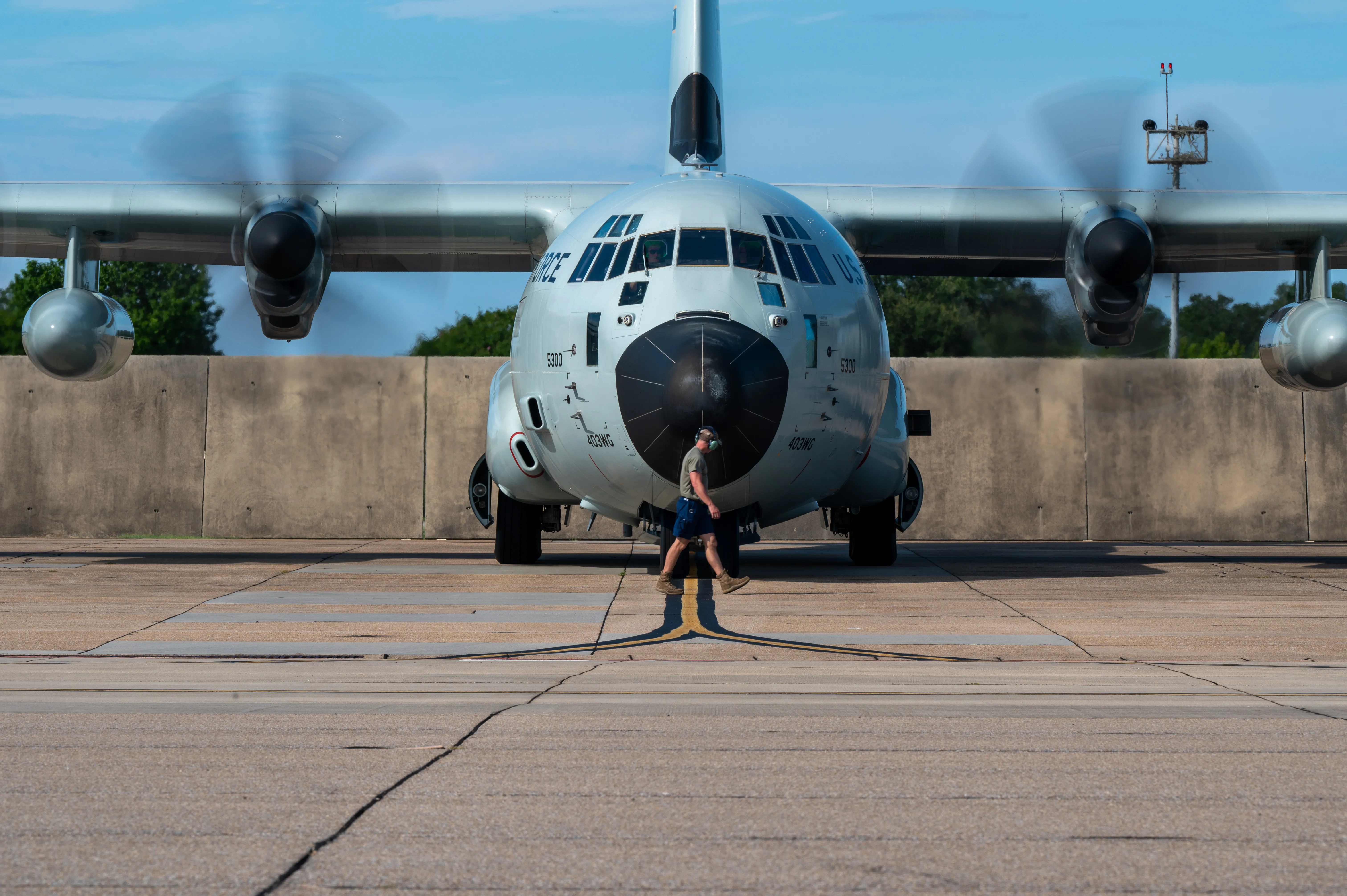
Every mission begins long before the engines start. The tasking originates from the National Hurricane Center (NHC), which passes its requirements through CARCAH, the Chief, Aerial Reconnaissance Coordination, All Hurricanes. CARCAH is the coordination point between NHC's forecast needs and the available aircraft and crews.
The Tasking Process
When NHC decides it needs aircraft data, CARCAH issues a tasking message specifying the storm, the type of mission (fix, rotational, or synoptic surveillance), the desired flight pattern, and the time window. The 53rd WRS operations center and NOAA's Aircraft Operations Center then work out which crews and aircraft can meet it.
Crew Rest and Readiness
Crew rest and duty limits follow the operator’s rules and mission conditions. A single 12-hour rule should not be applied indiscriminately to NOAA and Air Force operations.
Weather Briefings and Fuel Planning
Before each mission, the crew gets a detailed weather briefing: the latest satellite imagery, radar, and any earlier reconnaissance from the storm, plus its current intensity, structure, and any patches of especially hazardous convection. Fuel planning accounts for the mission length, the distance to alternate airports, and the chance that conditions at the home base deteriorate during the flight. Alternates are identified along the route and near the operating area.
Abort Criteria
Abort criteria are set before takeoff. The aircraft commander has final authority to abort at any point if conditions exceed safe limits, whether that's turbulence beyond design loads, an equipment failure that compromises the mission or safety, or weather at the recovery base that rules out a safe landing. The culture is explicit that no single data point is worth an aircraft or a crew.3
Turbulence Encounters and G-Forces
Turbulence is the most immediate physical hazard of hurricane flying, and it changes dramatically depending on where the aircraft is in the storm.
Turbulence by Storm Region
Rainbands can contain severe convection, the eyewall can be turbulent, and the eye is often calmer. None of these regions guarantees a particular ride. Crews use current observations and procedures rather than category or location alone to judge hazards. Unsecured movement in a rainband is not inherently safe.
G-Forces in the Eyewall
Turbulence changes the load on an aircraft and its occupants. Level unaccelerated flight is approximately +1g; weightlessness is near 0g, not −1g. Actual loads and allowable limits depend on the aircraft and flight conditions.
Crews secure equipment and use appropriate restraints during hazardous flight. Aircraft load limits depend on configuration and operating conditions; crews follow approved procedures rather than a generic margin quoted here.
Penetration Altitude and Flight Levels
The altitude at which an aircraft crosses a hurricane is a real decision, balancing data quality, crew safety, and the specific mission.
WC-130J Super Hercules
The Air Force's WC-130J typically penetrates at about 10,000 feet (3,000 m, the 700-mb level).45 That's standard for the vortex data messages NHC uses to fix the center and gauge intensity. The 700-mb level is low enough to sample conditions relevant to surface impacts, high enough to avoid the worst of the low-level turbulence.
WP-3D Orion
NOAA's WP-3Ds penetrate between 8,000 and 12,000 feet (2,400 and 3,700 m), depending on the research objective. Standard reconnaissance runs at 10,000 feet (3,000 m). For boundary-layer research the aircraft may drop lower, which sharpens the turbulence it takes.
Gulfstream IV-SP (G-IV)
NOAA's G-IV flies at 41,000 to 45,000 feet (12,500 to 13,700 m), above the storm rather than through it.6 It doesn't penetrate; it circles the hurricane at high altitude, dropping sondes into the surrounding air to map the steering currents and structure that shape the track. Flying above the storm, it meets far less turbulence than the low-altitude penetration aircraft.
The Altitude Trade-off
Altitude selection depends on storm structure, convection, icing, aircraft limits and mission needs. Higher is not automatically less turbulent, and the G-IV does not simply fly above every hurricane cloud top.
Crew Roles and Training
Each reconnaissance aircraft carries a specialized crew, every member trained well beyond standard military or civilian aviation qualifications.
WC-130J Crew Positions
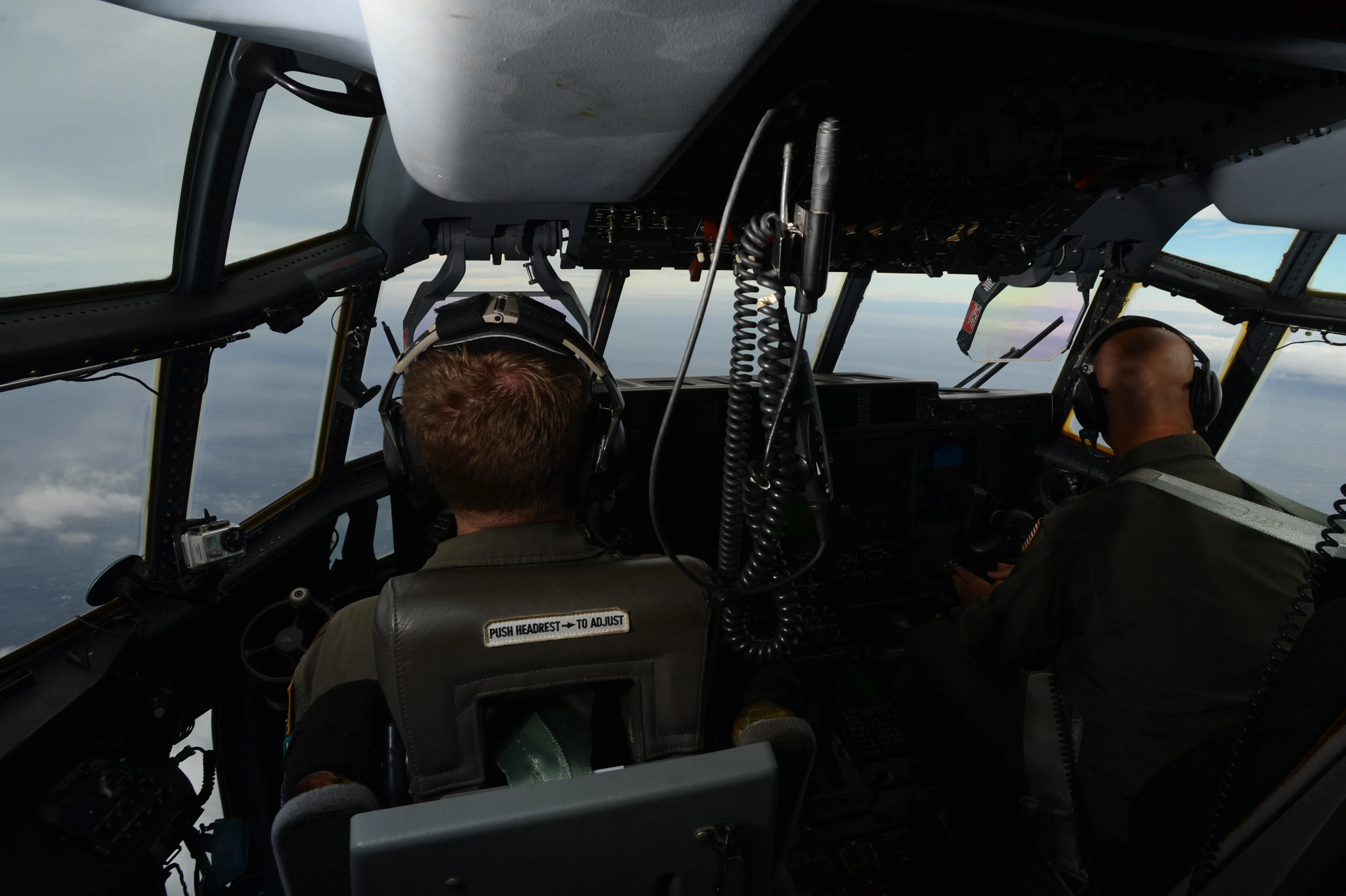
The standard five-person crew consists of a pilot, co-pilot, navigator, aerial reconnaissance weather officer and weather reconnaissance loadmaster. The loadmaster also operates dropsondes; listing a separate operator as a sixth standard crew member double-counts that role.5
WP-3D Crew Positions
- Pilot and co-pilot: fly the aircraft and manage all flight operations.
- Flight engineer: monitors engines, fuel, hydraulics, and electrics, which matters most under the stress of a penetration.
- Navigator: manages the flight track and the center fixes.
- Two flight directors (scientists): run the scientific mission, directing the pattern and instrument deployment to get the most data.
Training Pipeline
Qualification and recurrent training are specific to aircraft and crew position. There is no universal requirement to spend years flying weaker hurricane categories before entering a stronger storm.
Emergency Procedures
Catastrophic failures are extraordinarily rare in modern reconnaissance, and crews still prepare exhaustively for them.
Engine Loss
Both the WC-130J and the WP-3D (four turboprops each) can keep flying on fewer than four engines. Engine-loss procedures are drilled again and again in the simulator. If an engine fails inside the storm, the crew secures it, rebalances power on the rest, and flies the most direct route out. The aircraft are designed to fly safely on three or even two engines, with degraded performance.
Lightning Strikes
Lightning is a hazard addressed through aircraft protection, procedures and inspection. A strike can damage equipment or structure; it should not be dismissed as usually cosmetic without evidence.
Ditching Procedures
Crews train for emergencies over water and carry survival equipment. Survival in a storm-damaged sea is uncertain; this is not a guarantee that any engine-out or ditching scenario is survivable.
Communication Redundancy
Contact with ground stations runs on multiple redundant systems: HF (high frequency) radio for long-range work over open ocean, satellite links for voice and data, and VHF for shorter-range contact with air traffic control and other aircraft. If one fails, the crew switches to another. Data to NHC keeps flowing over satellite even when the storm's electrical activity disrupts voice.
Structural Design for Hurricane Flight
These aircraft are not standard models pulled off the line. They're modified and maintained to take the repeated stress of storm penetration over years of service.
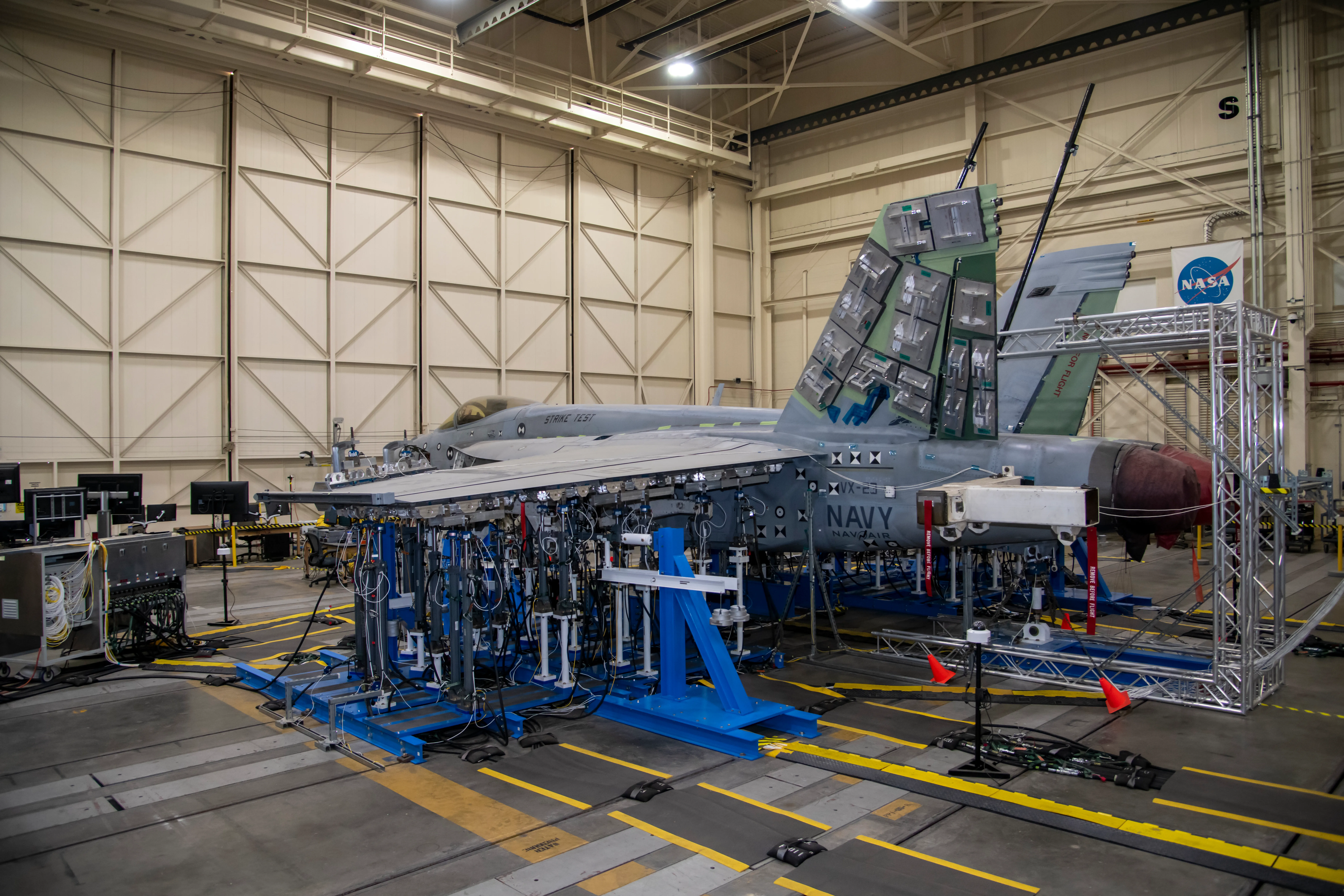
Repeated loads and corrosion make maintenance important. Both single-event overload and accumulated fatigue can damage an aircraft; neither can be dismissed as the only significant structural risk.
Reinforced Airframes
The research aircraft carry specialized equipment and undergo maintenance and service-life work. NOAA’s P-3 service-life extension included new wings and upgraded engines. That does not establish a blanket claim that every part is reinforced beyond the original design.7
Anti-Corrosion Treatments
Reconnaissance aircraft routinely fly through salt spray and saltwater-saturated air at low altitude over open ocean, and salt is one of the most aggressive corrosive agents there is for an aluminum airframe. Both the WC-130J and the WP-3D get extensive anti-corrosion treatment: specialized coatings, corrosion-inhibiting compounds in structural cavities, and regular wash-downs after ocean missions.
Non-Destructive Inspection (NDI)
Inspection and maintenance look for fatigue, corrosion and other damage. Applicable procedures determine inspection methods, intervals, repairs and return-to-service decisions; inspection does not guarantee that damage can never occur.
Physiological Challenges
The human body takes real stress on these missions, and managing it is part of crew safety.
Extended Mission Duration
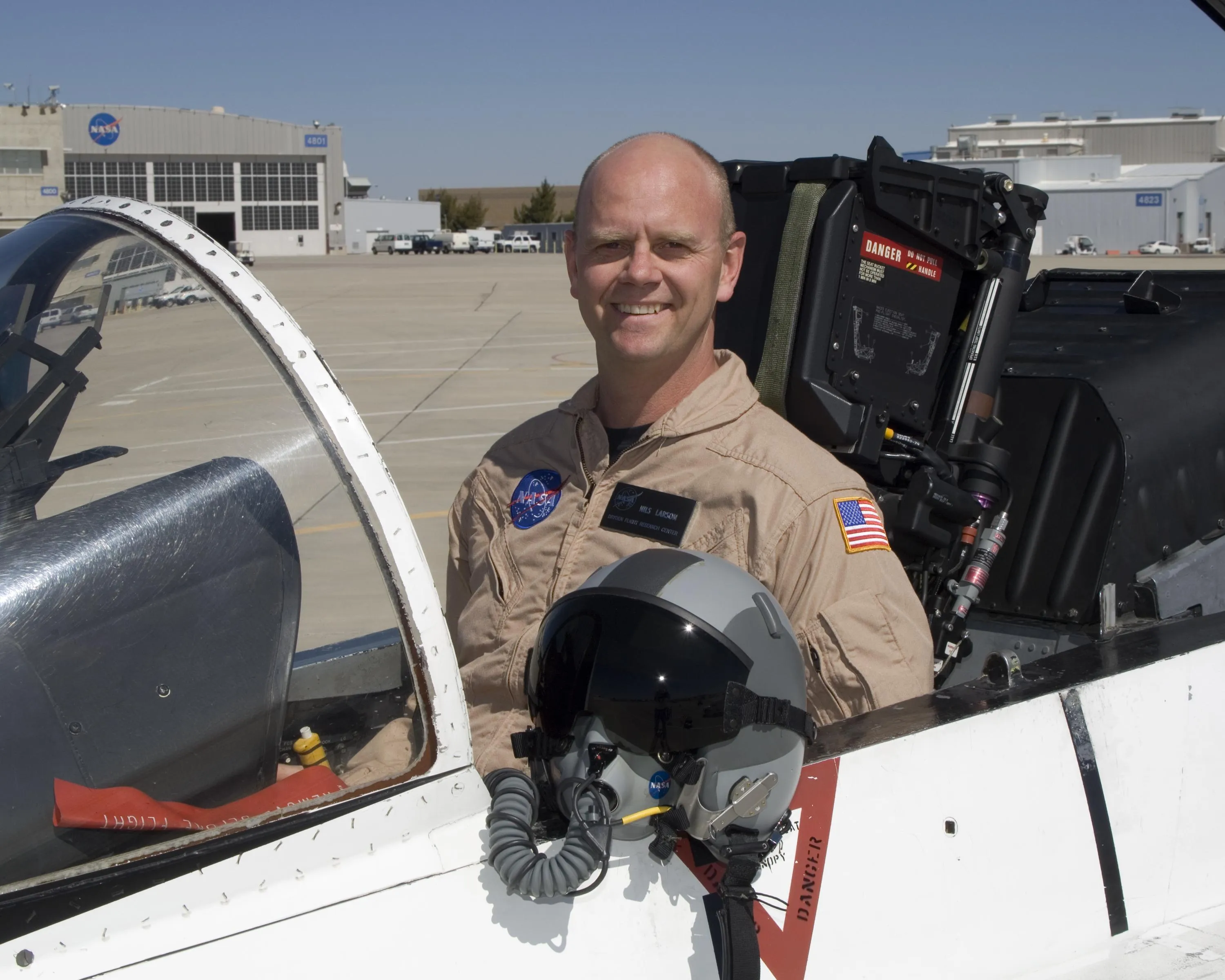
WC-130J missions typically run 8 to 12 hours, and WP-3D missions can go to 10.8 The length, plus the physical toll of turbulence and the mental demand of working in a hazardous environment, builds cumulative fatigue. Crews manage it with structured rest during the calmer parts of the flight, hydration and food, and strict crew-rest rules between missions.
Motion Sickness
Motion sickness can affect crew performance. Medication use must comply with aviation medical rules; some common motion-sickness drugs impair alertness and are unsuitable for flying duties.
Noise Exposure
Aircraft noise requires a hearing-conservation approach appropriate to the measured exposure. Generic cabin levels and a simplified OSHA threshold do not establish the requirements for every flight.
Pressure Changes
During altitude changes, the descent from cruise to the 10,000-foot (3,000 m) penetration level and the climb back afterward, crew feel pressure swings that can cause ear discomfort and sinus pain. It's like a commercial flight, but more frequent within a single mission, since a multi-pass pattern may cycle through several altitude transitions.
Reconnaissance safety depends on trained crews, maintained aircraft and the decision to change or stop a mission when needed. Uncrewed systems can reduce crew exposure in some observing tasks, while introducing their own technical limitations.
Sources
-
NOAA, loss in Hurricane Janet. https://www.aoml.noaa.gov/hurricane_blog/60th-anniversary-of-navy-hurricane-hunter-lost-in-storm/ ↩
-
403rd Wing, Honoring Swan 38. https://www.403wg.afrc.af.mil/News/Article-Display/Article/1819689/honoring-swan-38/ ↩
-
53rd Weather Reconnaissance Squadron (Air Force Reserve "Hurricane Hunters"), official statement on the Hurricane Melissa mission abort, October 28, 2025: "the aircraft briefly experienced forces stronger than normal due to turbulence. While this does not automatically indicate damage, standard safety procedures require an inspection before returning to operations." Reproduced in The Aviationist. https://theaviationist.com/2025/10/28/hurricane-hunters-scrub-missions-hurricane-melissa/ ↩
-
National Hurricane Center. NHC Aircraft Reconnaissance. NOAA. "The ten Lockheed-Martin WC-130J aircraft and crews are part of the 403rd Wing, based at Keesler Air Force Base in Biloxi, Mississippi." https://www.nhc.noaa.gov/recon.php ↩
-
403rd Wing (Air Force Reserve "Hurricane Hunters"). WC-130J Hercules (fact sheet). U.S. Air Force. https://www.403wg.afrc.af.mil/About/Fact-Sheets/Display/Article/192525/wc-130j-hercules/ ↩ ↩2
-
Aberson, S. D. (2010). 10 years of hurricane synoptic surveillance (1997–2006). Monthly Weather Review, 138(5), 1536–1549. https://doi.org/10.1175/2009MWR3090.1 ↩
-
NOAA P-3 service-life extension. https://omao.noaa.gov/aircraft-operations/news-media/article/noaa-p-3-service-life-extension-program ↩
-
NOAA Office of Marine and Aviation Operations. NOAA Hurricane Hunters. "NOAA's two Lockheed WP-3D Orion four-engine turboprop aircraft ... probe every wind and pressure change, repeating the often grueling experience again and again during the course of an 8-10 hour mission." https://www.omao.noaa.gov/aircraft-operations/noaa-hurricane-hunters ↩