When Hurricane Katrina's levees and floodwalls failed in 2005, about 80% of New Orleans flooded, a disaster that post-storm investigations traced largely to engineering and design deficiencies, not simply an overwhelming storm.1 In response, the U.S. Army Corps of Engineers strengthened and expanded the region’s defenses as the Hurricane and Storm Damage Risk Reduction System (HSDRRS), a roughly $14 billion ring of levees, floodwalls, gates, and pumping stations around greater New Orleans, with major components completed in stages and among the largest civil-works efforts in U.S. history.2
From Failure to Reform
IPET documented multiple failure mechanisms, including foundation failures before overtopping at some floodwalls and overtopping erosion elsewhere. The rebuilt system targets the 1% annual-chance surge event under its design assumptions; that is a risk-reduction standard, not a guarantee against every hurricane.12
A 100-year event has a 1% annual probability of exceedance under the assumptions used in the estimate. If that probability stays constant and annual events are independent, the chance of at least one exceedance in 30 years is about 26%. The term does not describe a schedule.
The Lake Borgne Surge Barrier
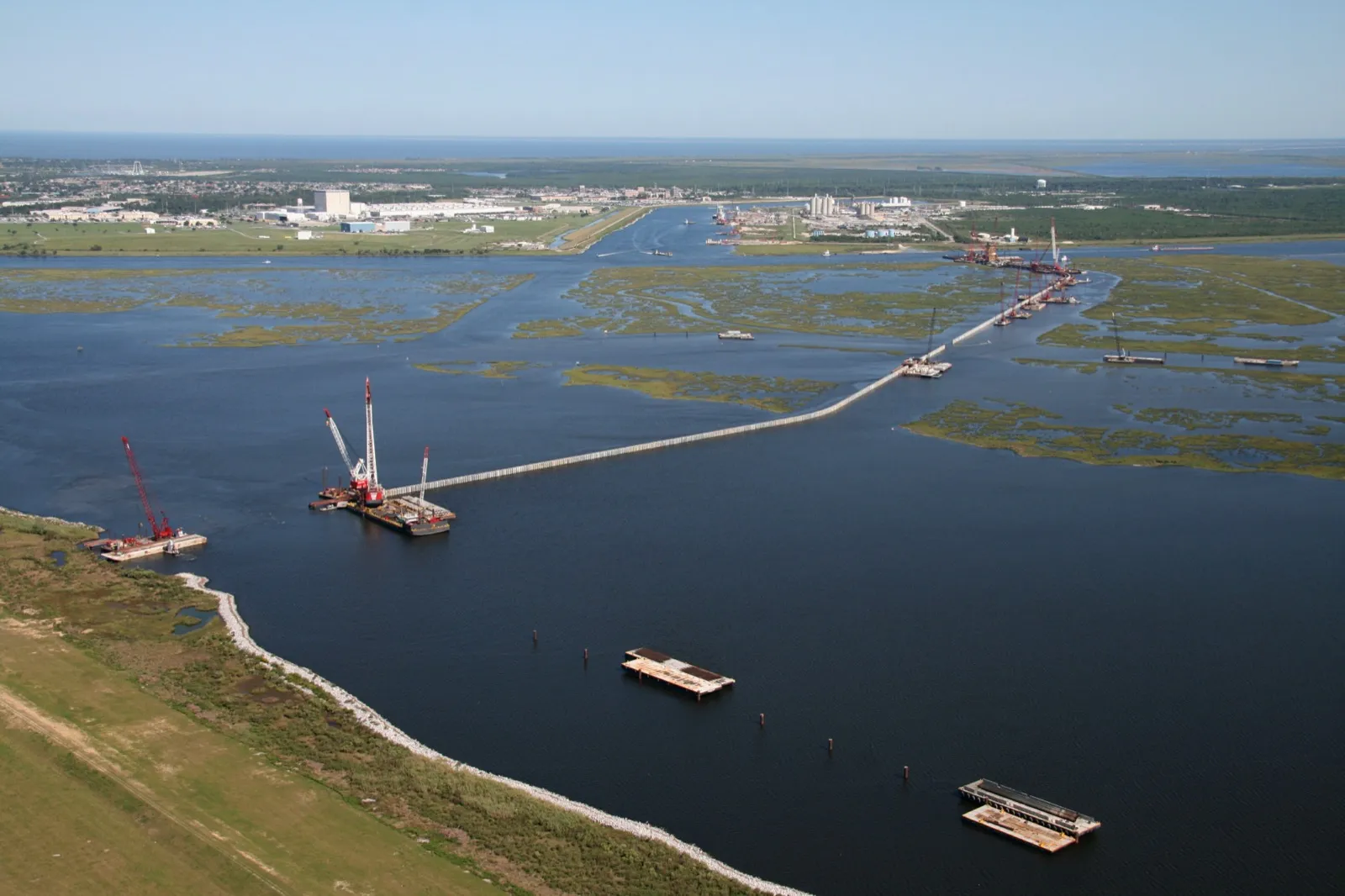
The centerpiece is the Lake Borgne Surge Barrier, a roughly 1.8-mile-long (2.9 km), wall with a top elevation of approximately 26 feet (7.9 m) NAVD88, nicknamed the "Great Wall of Louisiana," that arcs across the approaches to the Inner Harbor Navigation Canal.2 Built for about $1.1 billion, it blocks surge from Lake Borgne and the Gulf Intracoastal Waterway from funneling into the heart of the city, the very pathway that helped doom the Lower Ninth Ward in 2005. It was the largest design-build civil-works project in the Corps' history when it was completed.2
The West Closure Complex
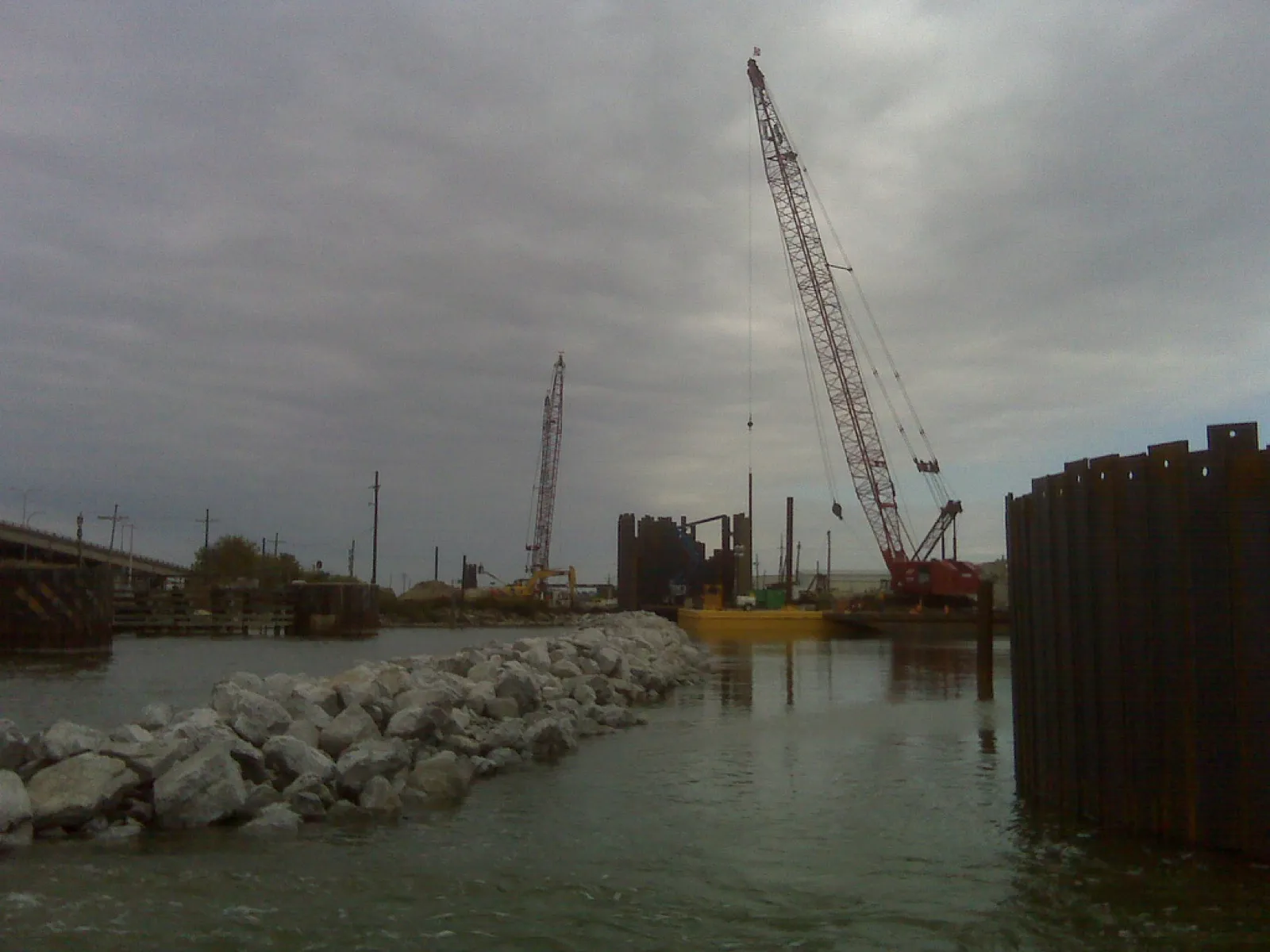
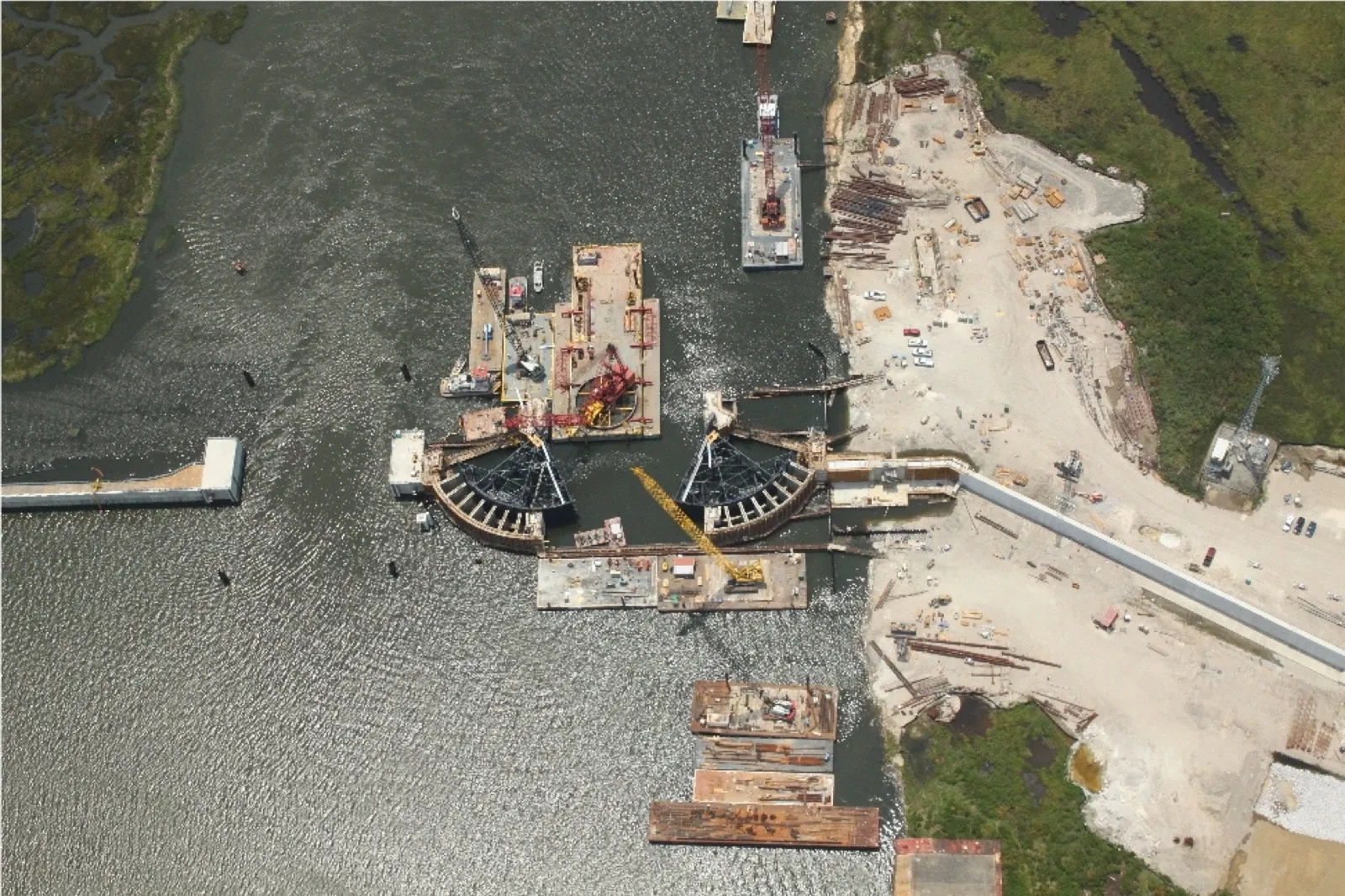
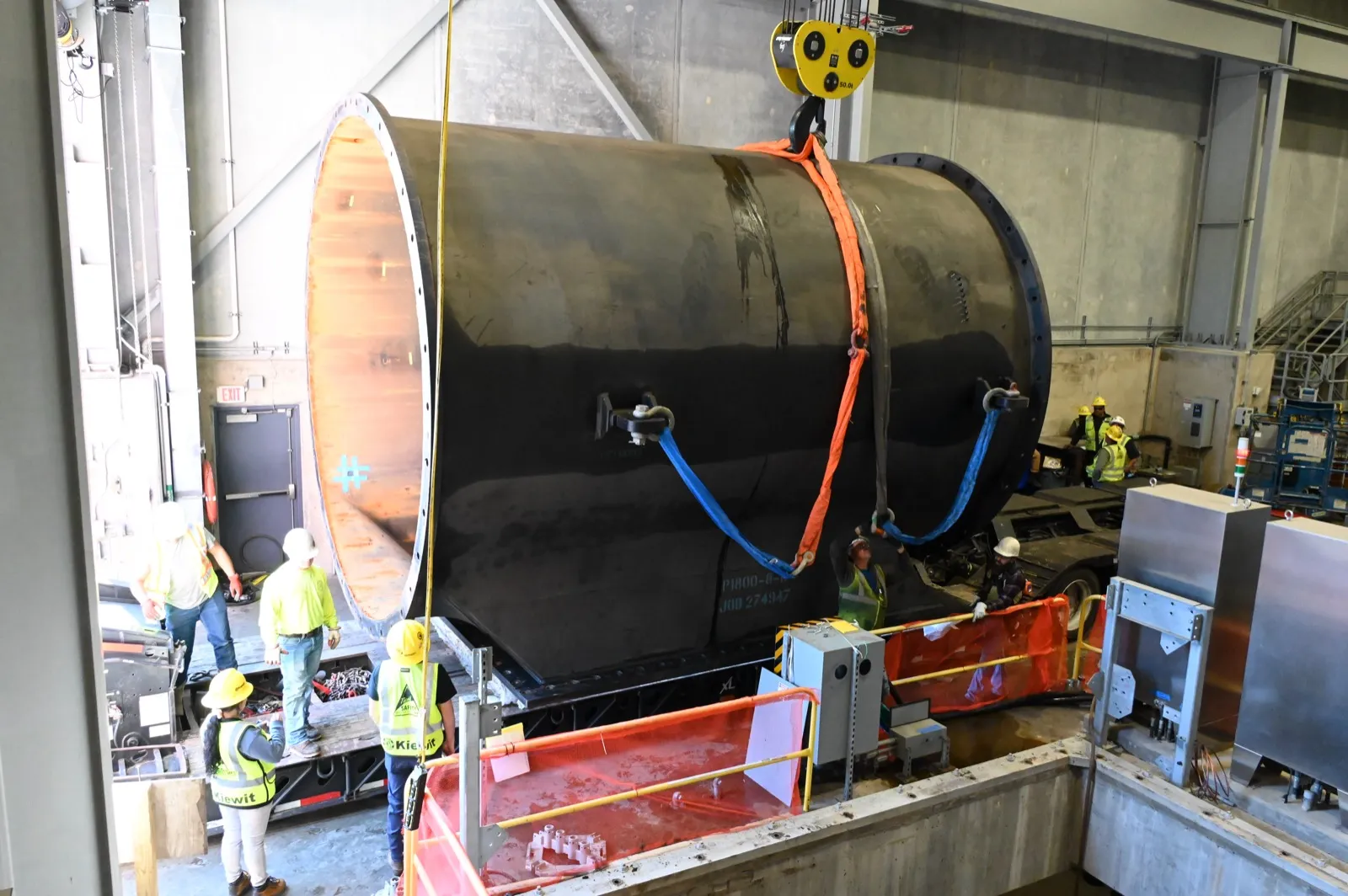
Guarding the West Bank, the Gulf Intracoastal Waterway West Closure Complex pairs a 225-foot (69 m) navigable floodgate with one of the largest drainage pumping stations in the world, capable of moving on the order of 19,000 cubic feet of water per second (540 m³/s).2 When a storm approaches, the gate closes to hold back surge while the pumps lift interior rainwater over the barrier, solving the dual problem of keeping the sea out while preventing the protected basin from filling with rain.
Closing the Canals
Major outfall-canal breaches occurred along the 17th Street and London Avenue canals. Orleans Avenue was not breached in the same way. Permanent closures and pump stations were later built at all three canal mouths to limit lake surge while allowing drainage to be pumped out.2
Tested by Ida
The rebuilt system faced its sternest test on August 29, 2021, Katrina's 16th anniversary, when Hurricane Ida struck as a Category 4. The HSDRRS held: New Orleans was spared the catastrophic surge flooding of 2005, and the levees, walls, and barriers performed as designed.3 (Ida still knocked out the regional power grid, a reminder that flood defenses are only one part of a city's resilience.)
The Limits of the Wall
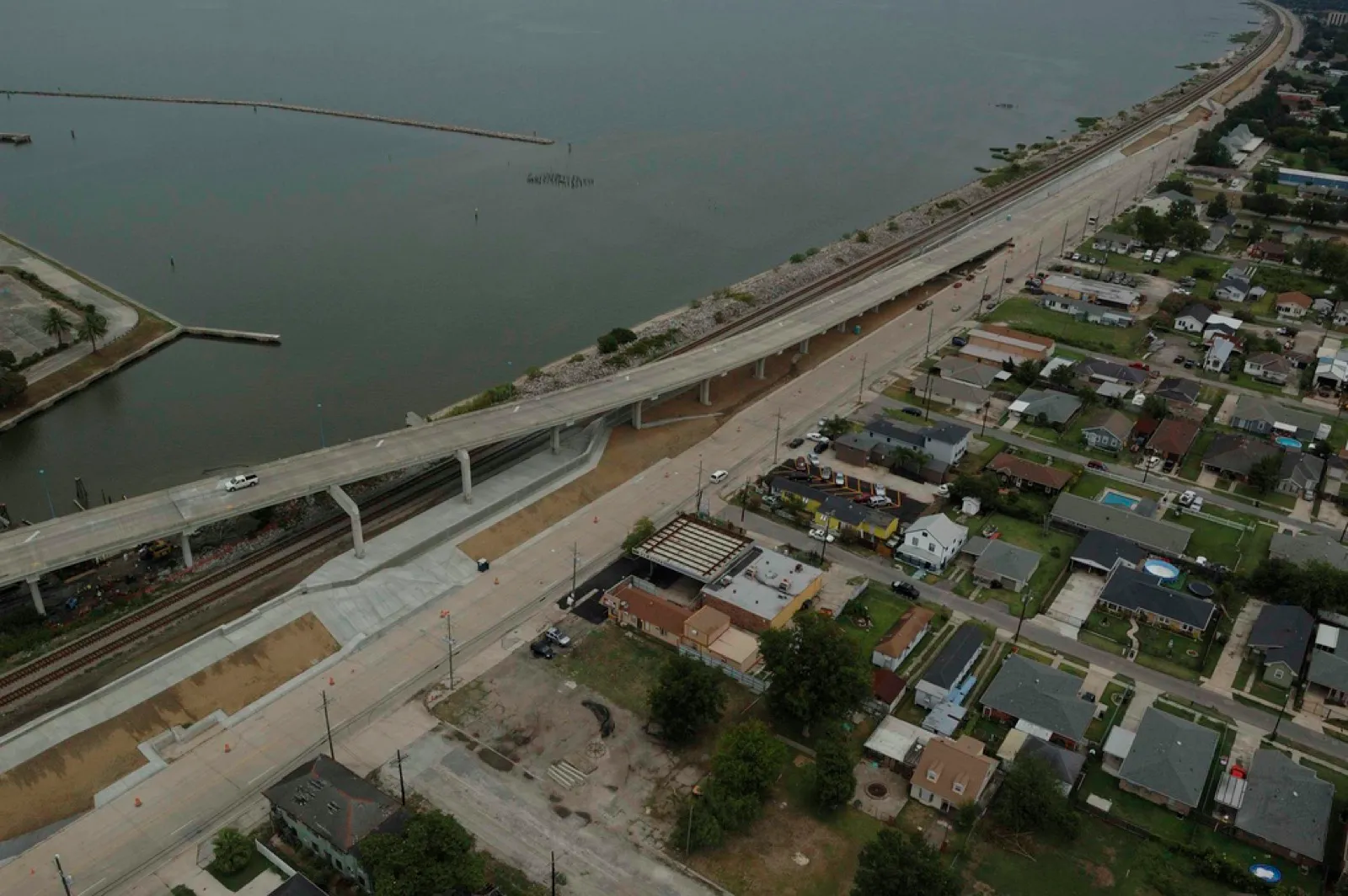
For all its scale, the HSDRRS is not "Katrina-proof." It is certified to the 100-year standard, which is a meaningful but not absolute level of protection; stronger storms can still overwhelm it.2 More fundamentally, the ground beneath New Orleans is sinking through subsidence even as sea levels rise, so the levees are already losing height and will need repeated, costly lifts to hold their design protection in the decades ahead.2 The Great Wall bought the city time and safety; keeping that protection is an open-ended commitment, not a finished project. Maintaining that protection requires continuing inspection, investment, and adaptation.
Sources
-
Interagency Performance Evaluation Task Force (IPET). Performance Evaluation of the New Orleans and Southeast Louisiana Hurricane Protection System: Final Report, Volume III — The Hurricane Protection System. U.S. Army Corps of Engineers / ERDC. https://erdc-library.erdc.dren.mil/items/4d34c700-a7fc-44b6-9fe8-66306d3520b9 ↩ ↩2
-
U.S. Army Corps of Engineers, Team New Orleans. Hurricane and Storm Damage Risk Reduction System (HSDRRS). https://www.mvn.usace.army.mil/Missions/HSDRRS/ ↩ ↩2 ↩3 ↩4 ↩5 ↩6 ↩7 ↩8
-
National Hurricane Center. (2022). Tropical Cyclone Report: Hurricane Ida (AL092021). NOAA. https://www.nhc.noaa.gov/data/tcr/AL092021_Ida.pdf ↩