Post-Tropical Hybrid Storm

Hurricane Sandy (2012)

A hurricane that merged with a nor'easter to create unprecedented Mid-Atlantic coastal surge, flooding NYC subways, tunnels, and streets with saltwater damage affecting millions.

Last updated July 3, 2026

Hurricane Sandy struck the northeastern United States in late October 2012 as a post-tropical cyclone that had merged with a nor'easter system, creating a rare and devastating hybrid storm. Sandy made landfall in New Jersey as a tropical storm (Category 1 at the peak of its tropical life) but generated a storm surge of 9.4 ft (2.9 m) in New York and nearby areas. The surge was amplified by the nor'easter circulation, which added wind and water movement from the north, creating unprecedented coastal water levels. Sandy's hybrid nature, a hurricane's circulation fused with a nor'easter's, produced impacts unlike a typical hurricane's. Water inundated the NYC subway system, flooding tunnels and stations. Saltwater damage affected electrical systems, subway infrastructure, and buildings far inland. Sandy caused about 147 direct deaths1 and $88.5 billion in damage (2024 CPI-adjusted), making it the second-costliest U.S. hurricane at the time, behind only Katrina.2

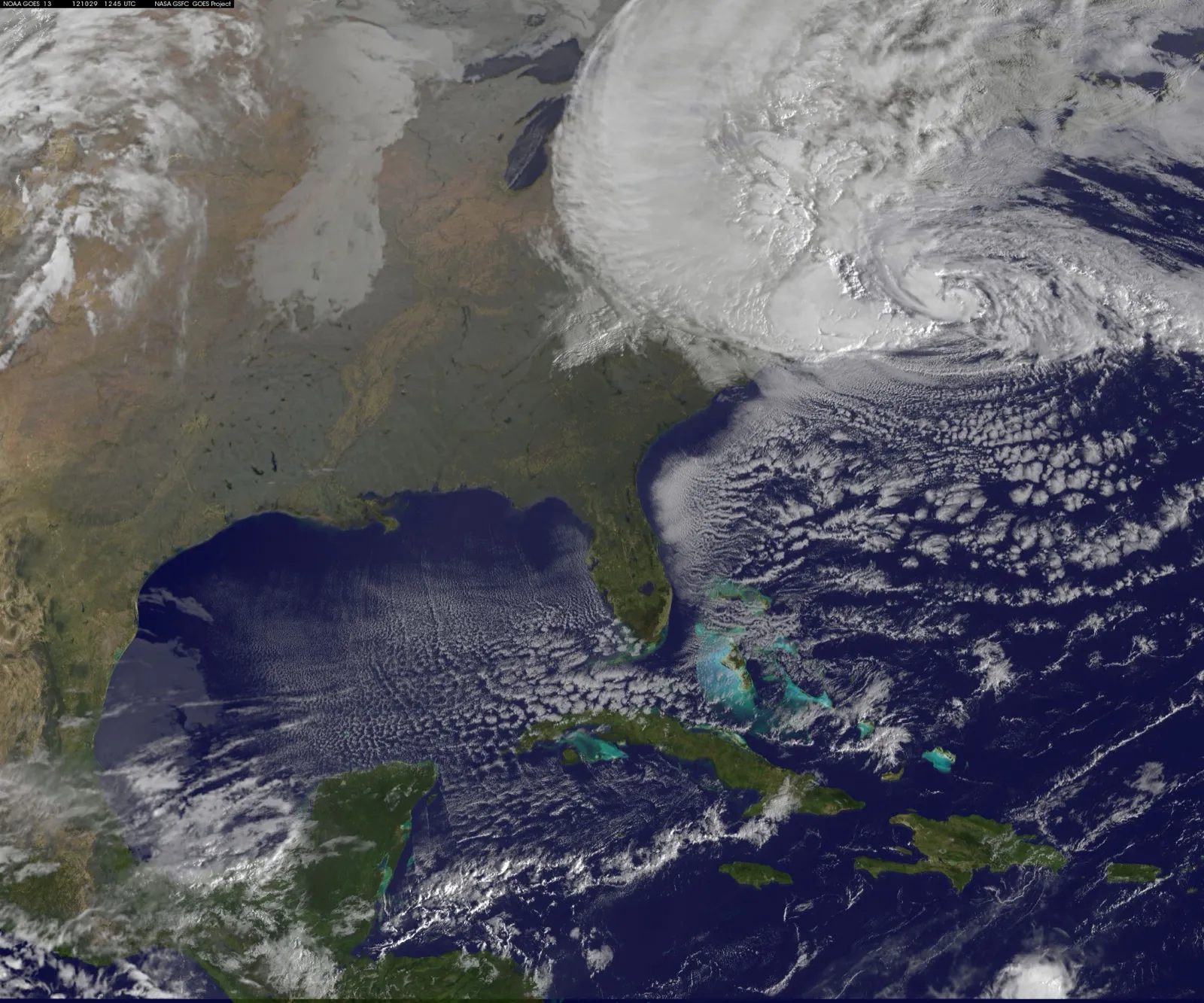
Satellite view of Hurricane Sandy over the U.S. East Coast on October 29, 2012
Hurricane Sandy's enormous wind field spanning the U.S. East Coast, October 29, 2012. Credit: NASA · Public domain

Meteorological Evolution

Sandy originated as a tropical wave in the eastern Atlantic, becoming a tropical depression southeast of Jamaica. The system moved northwestward through the Caribbean, reaching Category 1 strength. As Sandy moved toward the U.S. coast in late October, a mid-latitude trough and nor'easter system approached the Atlantic coast at the same time. Rather than pushing Sandy out to sea, the trough merged with it, creating a rare hybrid storm. The nor'easter's cold core aloft and northeasterly winds at the surface combined with Sandy's tropical circulation, creating an expansive wind field and an unusual pressure pattern.

As Sandy approached New Jersey, it transitioned to post-tropical status, losing its tropical characteristics while maintaining the hybrid circulation. Maximum winds dropped to tropical storm strength, but the storm's wind field actually expanded significantly. The merger with the nor'easter created a massive area of damaging winds extending far inland, from Florida to Maine. This extensive wind field, combined with the storm surge amplified by the nor'easter circulation, created devastating impacts across the entire Mid-Atlantic region.

Surge & Water Damage

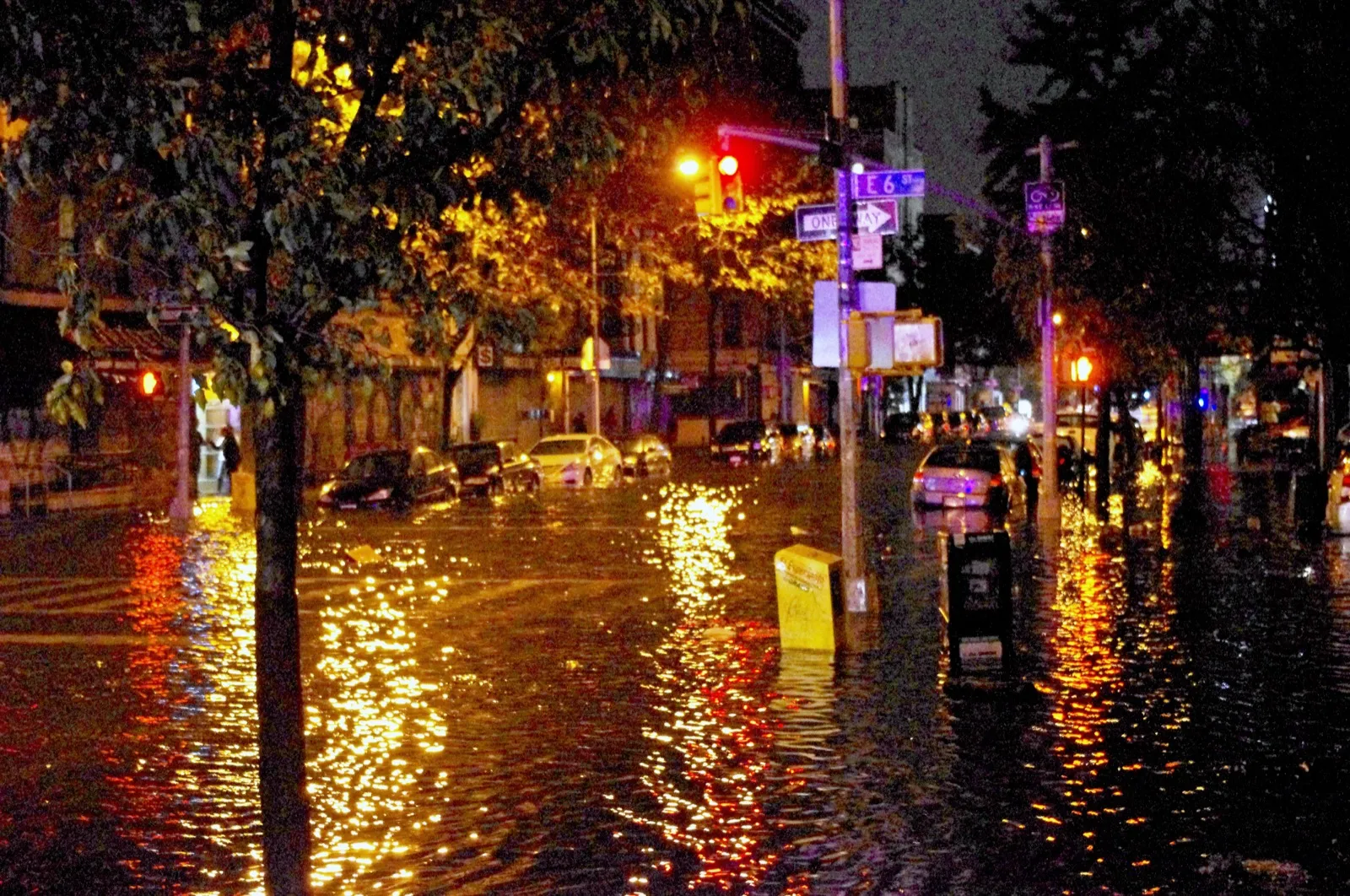
Sandy's storm surge was unprecedented for the Mid-Atlantic. Water levels rose 9.4 ft (2.9 m) in parts of New York, with higher surge observed in Battery Park and other coastal areas.1 The surge inundated lower Manhattan, flooding basements, subway tunnels, and electrical infrastructure. Saltwater infiltrated underground electrical systems, causing fires and forcing extended blackouts affecting millions. The surge pushed far inland, with water reaching areas typically safe from hurricane surge due to terrain and distance from the coast.

Floodwaters on Avenue C in Manhattan's East Village during Hurricane Sandy
Sandy's surge floods Avenue C in Manhattan: the storm tide inundated lower Manhattan and the subway system. Credit: David Shankbone · CC BY 3.0

The NYC subway system sustained catastrophic saltwater damage. Water flooded tunnels, subways, and stations, damaging electrical systems and rail beds. The system required months for recovery. Ground-level buildings and basements throughout lower Manhattan and Brooklyn were flooded. Vehicles parked in garages became submerged. The saltwater caused corrosion to electrical systems and vehicles, with replacement costs extending far beyond the initial inundation.
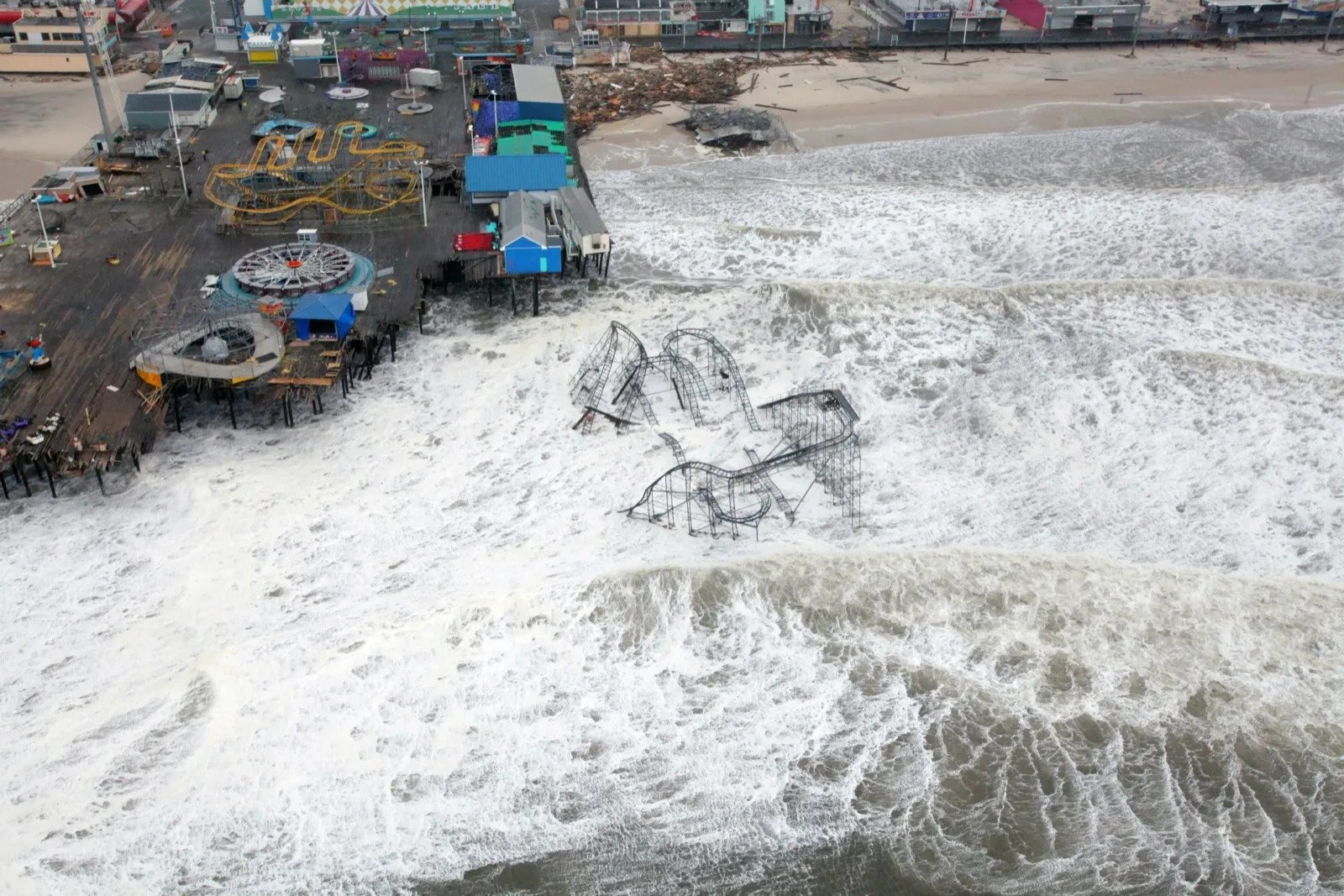
Aerial view of the Seaside Heights amusement pier with the Star Jet roller coaster collapsed into the ocean
Aerial of Seaside Heights, NJ: Sandy's surge swept the Casino Pier's Star Jet roller coaster into the Atlantic. Credit: U.S. Air Force / Master Sgt. Mark C. Olsen · Public domain

Impacts & Recovery

Sandy affected millions across the northeast. Approximately 8 million people lost electricity, some for extended periods.1 Power restoration in New York took weeks due to saltwater damage to equipment. New Jersey suffered severe damage to the shore and inland areas. Wind damage extended as far north as Maine. Sandy's 147 direct deaths spanned several countries, and further lives were lost to falling trees, vehicle accidents, and indirect causes such as stress and medical complications during recovery.
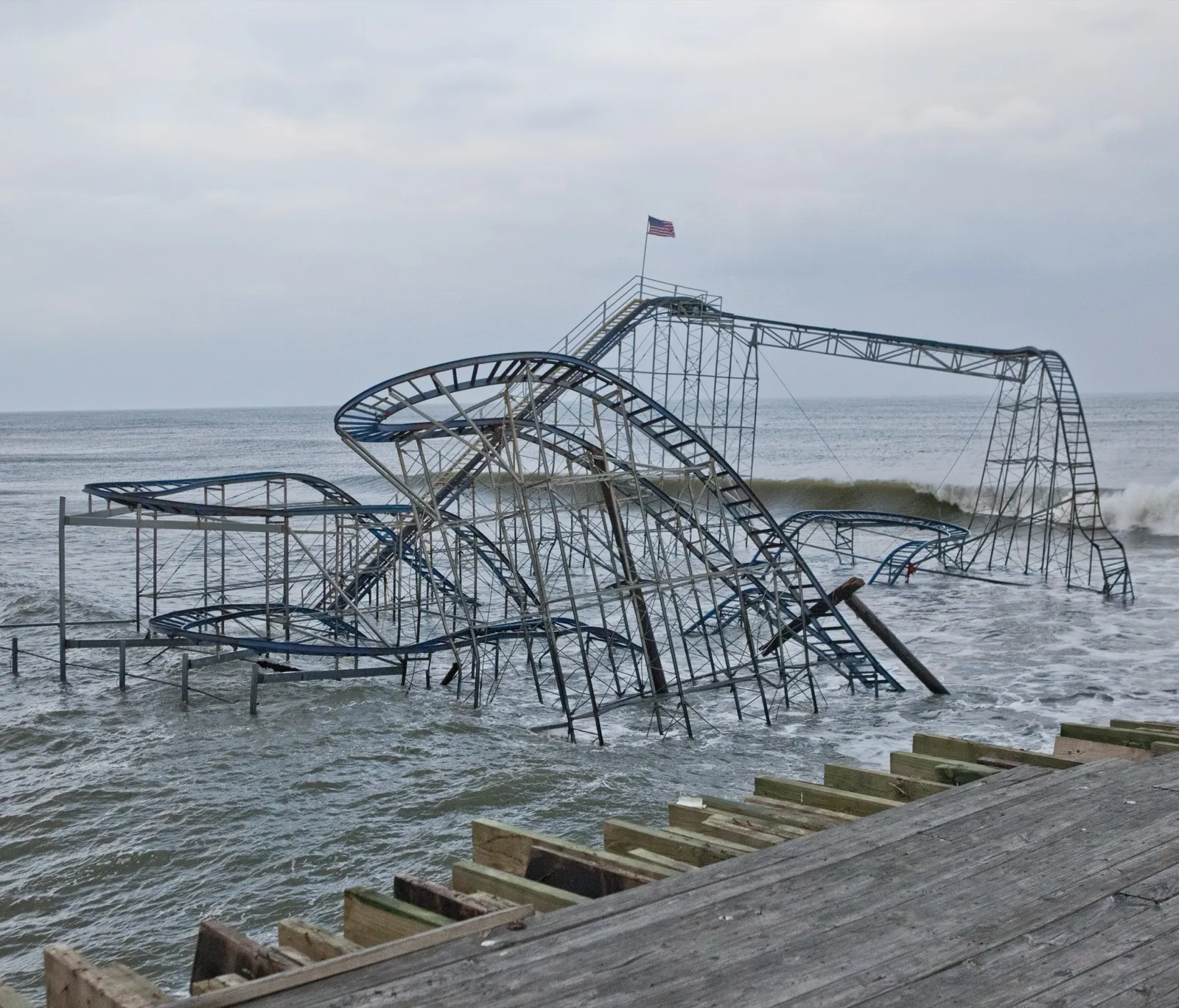
The Star Jet roller coaster standing in the surf at Seaside Heights after Hurricane Sandy
The Star Jet roller coaster left standing in the surf at Seaside Heights: an enduring image of Sandy's destruction. Credit: Anthony Quintano · CC BY 2.0

The $88.5 billion in damage (2024 CPI-adjusted) made Sandy the second-costliest U.S. hurricane at the time (behind Katrina). Economic disruption was severe, with businesses closed for weeks, supply-chain disruptions, and long-term rebuilding costs. The disaster accelerated discussions about coastal resilience, climate change, and extreme-weather preparedness in densely populated coastal areas.

Sandy is the storm that moved coastal resilience from a talking point to a budget line. What made it so expensive was not extraordinary wind but ordinary water reaching infrastructure that sat just above the old high-water mark: subway tunnels, electrical vaults, the tubes under the rivers. Every inch of sea-level rise lowers the bar a storm has to clear to put saltwater into those systems, which is why we read Sandy less as a freak hybrid than as a preview of what a routine surge will eventually do to an unhardened coast. The uncomfortable part is that hardening a city already built to the water's edge costs far more than building it right would have, and there is no version of that bill that is cheap. For the mechanism, see storm surge; for the trend behind it, climate change and hurricane intensity.
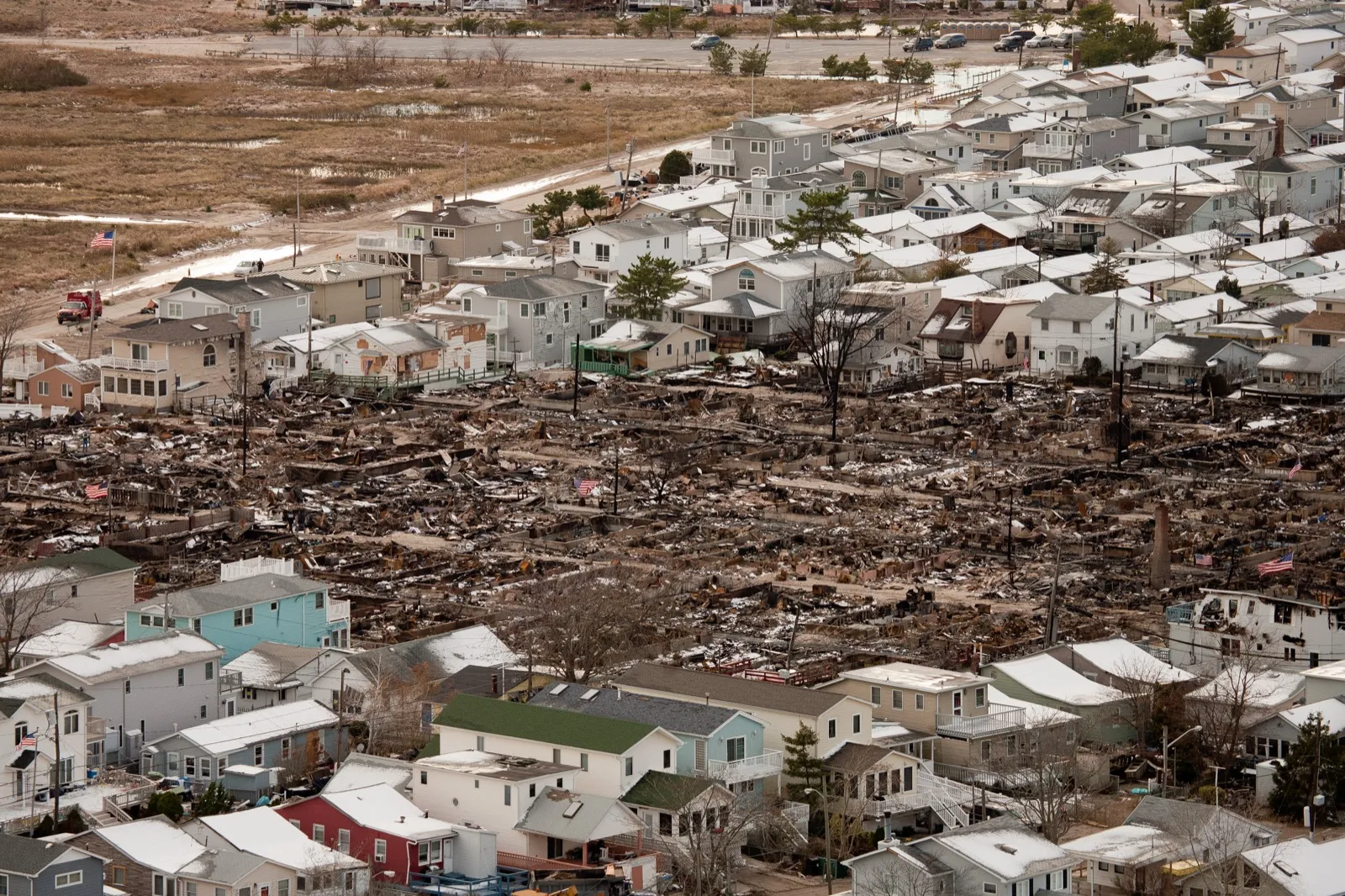
Aftermath of the fire that destroyed more than 100 homes in Breezy Point, Queens during Hurricane Sandy
More than 100 homes burned in Breezy Point, Queens, as Sandy's floodwaters cut off firefighters. Credit: FEMA / Andrea Booher · Public domain

Sources

  1. Blake, E. S., Kimberlain, T. B., Berg, R. J., Cangialosi, J. P., & Beven, J. L. (2013). Tropical Cyclone Report: Hurricane Sandy (AL182012). National Hurricane Center, NOAA. https://www.nhc.noaa.gov/data/tcr/AL182012_Sandy.pdf 2 3

  2. NOAA National Centers for Environmental Information. U.S. Billion-Dollar Weather and Climate Disasters. https://www.ncei.noaa.gov/access/billions/