Storm surge is the rapid rise in water level that occurs as a hurricane's winds and low pressure push the ocean inland. It is not a single wave, but a sustained wall of water that can persist for hours, inundating coastal communities far from the storm's center. Understanding what drives surge formation, how high it can climb, and why it is more lethal than hurricane winds is essential knowledge for anyone living near a coast.
What Is Storm Surge?
Storm surge is an abnormal rise in water level above the predicted astronomical tide, generated by a storm. Onshore wind stress is usually the dominant coastal driver; atmospheric pressure, rotation, bathymetry, and the storm’s movement also matter. Extratropical storms can produce surge too.1
The water does not come in as a single breaking wave, though waves do ride on top of the surge. Instead, the ocean level rises steadily, pushing water inland in a wall that can be 5 to 10 feet (1.5 to 3 m) high or more. A storm surge event may last for several hours as the center of the hurricane passes nearby, and the water can remain elevated well after the worst winds have moved inland.
For many Northern Hemisphere landfalls, the largest surge occurs to the right of the track where winds push water onshore. This is not universal: coastline orientation, bays, bathymetry and the wind field determine the local response.1
How Storm Surge Forms
Three physical processes work together to create and amplify storm surge: wind-driven push, pressure relief, and a phenomenon called Ekman transport.
Wind-Driven Push
The most intuitive mechanism is wind. The rotating winds around a hurricane blow toward the coast, and this wind stress on the water surface drags the water forward. The stronger the winds and the longer they blow, the more water piles up. This is why larger storms with stronger winds typically produce higher surge.2
Pressure Dome
Lower atmospheric pressure contributes to sea-level rise. In a simplified equilibrium calculation, a 1 hPa pressure decrease corresponds to roughly 1 cm of water-level rise. Actual storm conditions are dynamic, so this is not a complete surge prediction.1
Ekman Transport
Earth’s rotation deflects wind-driven currents. In the ideal deep-water Ekman model, depth-integrated transport is 90 degrees to the right of the wind in the Northern Hemisphere and left in the Southern Hemisphere. Whether this moves water toward shore depends on wind direction and coastline orientation; shallow coastal dynamics differ from the ideal model.
Factors That Control Surge Height
The height of storm surge is not set by hurricane category alone, and if this article changes one thing you believe, we'd want it to be this. The Saffir-Simpson category measures peak wind; it says almost nothing about the water. A broad Category 2 crossing a wide, shallow shelf can drown a coastline that a compact Category 4 would spare. Several factors combine to decide how much water a storm pushes ashore, and category is only one of them.
Storm Intensity
Stronger storms produce higher surge. A Category 5 hurricane will generally create more surge than a Category 3 hurricane, all else being equal. Both the extreme winds and the very low pressure in intense storms contribute to greater water elevation.
Forward Speed
Forward speed does not have a single monotonic effect. Faster storms can produce higher surge on an open coast, while slower storms may produce more flooding in bays and sounds. Storm size, track and bathymetry must be considered together.1
Coastal Bathymetry and Continental Shelf Width
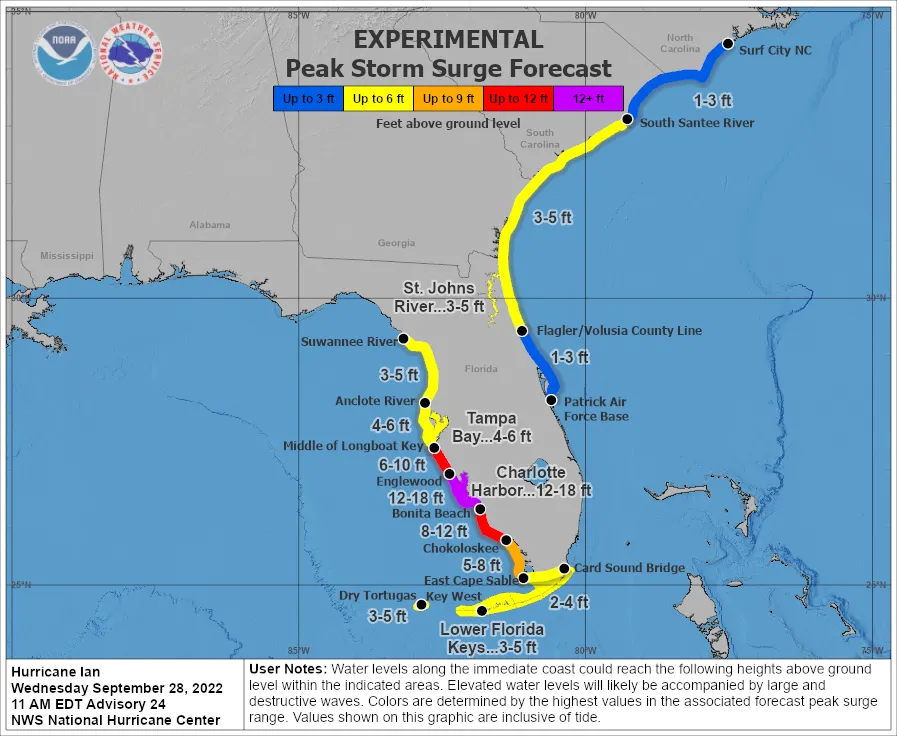
A wide, shallow shelf often favors larger surge because wind stress acts through a shallower water column. A steep shelf may limit surge but still allow large waves close to shore. Bays, channels and shoreline geometry alter both flow and water level.3
Local bathymetry and topography matter to modeling. A shoreline forecast range cannot establish the exact flood depth at one building; use the forecast datum, local elevation information and official evacuation zones.
Angle of Approach
Approach angle changes which winds push water toward a coast and for how long. There is no universally worst compass direction or right-side rule for every coastline.1
Astronomical Tide
The timing of hurricane arrival relative to the lunar tide significantly changes the severity of flooding. If a hurricane arrives at high tide, storm surge will add to the existing elevated water level, creating a higher total water level. Surge arriving at low tide will not reach as far inland. Spring tides, which occur around new and full moons when the sun and moon align gravitationally, produce higher normal tides, and if a hurricane arrives during spring tide, the compound effect can be catastrophic.
Storm Surge vs. Storm Tide
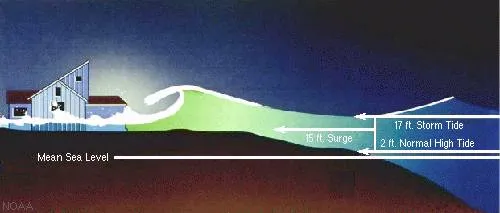
These terms are often confused, but they describe different things. Storm surge is the rise in water level caused by the hurricane itself, through wind and pressure effects. Storm tide is the combined water level: the storm surge plus the astronomical tide that would have occurred at that time regardless of the hurricane. If astronomical tide is 2 feet (0.6 m) above mean sea level and storm surge is 8 feet (2.4 m), the storm tide is 10 feet (3 m) above mean sea level.1 Understanding this distinction matters for interpreting forecasts and understanding flood risk, because the tide tells you the total height of water, not just the contribution from the hurricane.
Why Storm Surge Kills More People Than Wind
In the cited study of U.S. direct tropical-cyclone deaths over 1963–2012, surge accounted for about 49%, the largest individual category. This is not a timeless majority of all direct and indirect deaths.4
Wind and surge footprints vary widely. There is no universal 50-mile wind limit, and the number of people exposed depends on the storm and the coastline.
Surge combines flood depth, currents, waves, debris and erosion. Buildings perform differently according to their elevation, foundation and design; neither a hurricane category nor a single depth establishes which structures will survive.
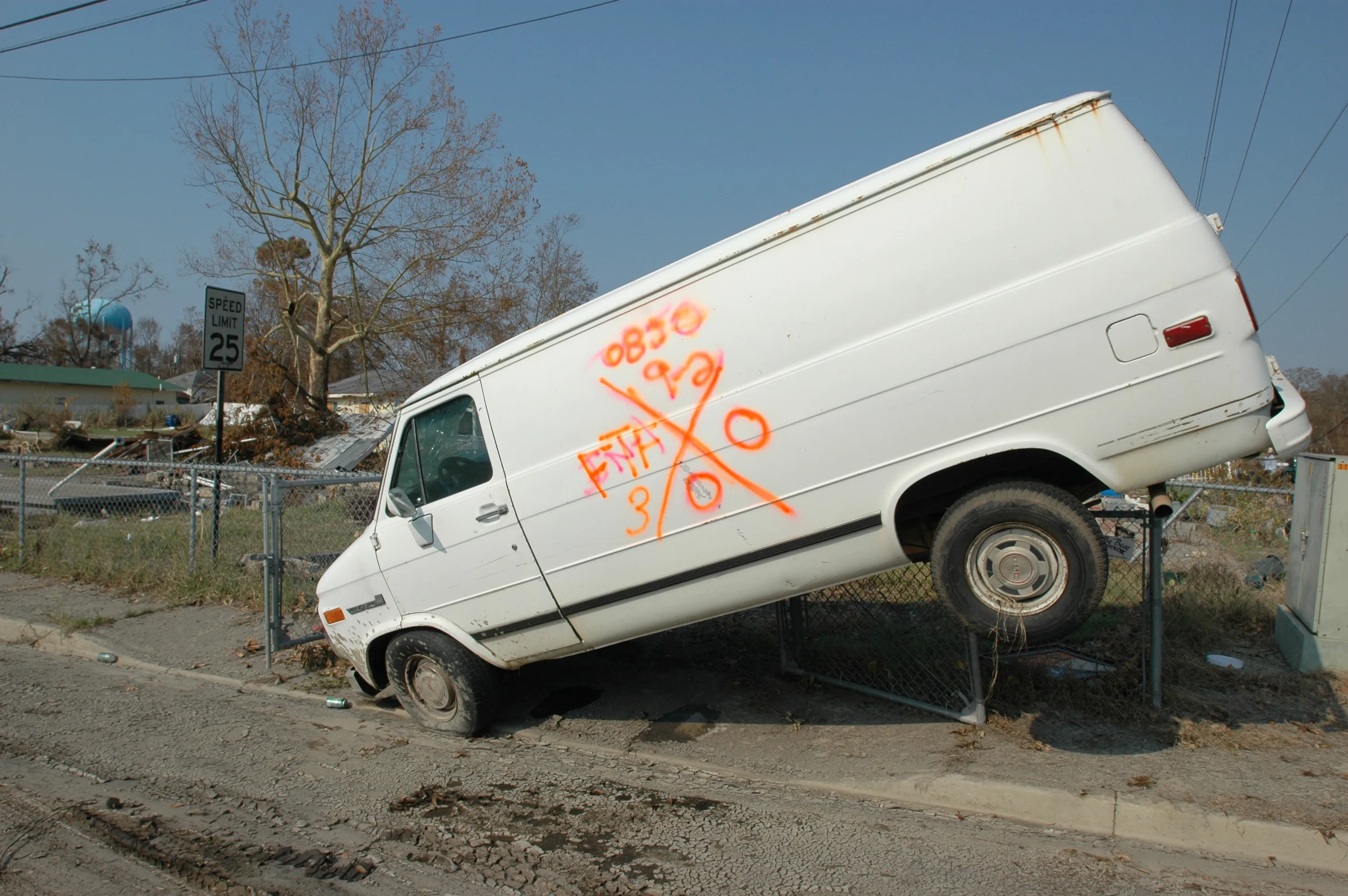
Additionally, storm surge brings saltwater into freshwater areas, contaminating drinking water supplies and damaging freshwater ecosystems. It carries floating debris, chemicals, and sewage inland. In rural and low-income areas without strong evacuation infrastructure, surge claims disproportionate numbers of lives.
For still water, pressure increases linearly with depth: p = ρgh. The resultant hydrostatic force on a vertical wall with water on only one side grows with the square of depth. Currents, breaking waves, debris and scour introduce additional loads; the relationship is not exponential.
Historical Storm Surge Events
Looking at past hurricanes provides perspective on how destructive surge can be.
Galveston, 1900
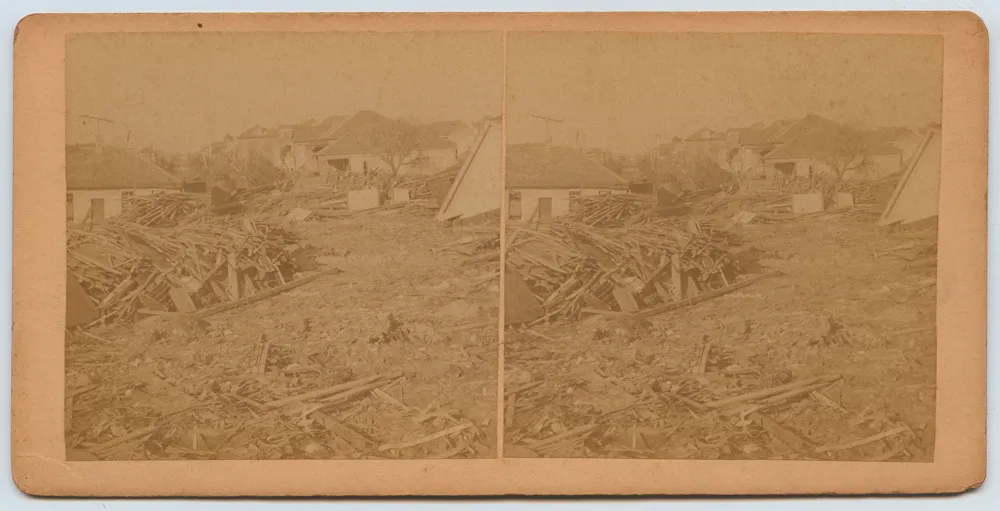
The Great Galveston Hurricane of September 8, 1900, remains the deadliest hurricane in U.S. history. Storm surge of approximately 15 feet (4.6 m) inundated the low-lying Texas coast, destroying most structures in Galveston and drowning an estimated 6,000 to 12,000 people.5 The Weather Bureau already issued storm warnings, but the surge threat was not adequately forecast or communicated. The disaster led to the construction of the Galveston seawall, one of the earliest major coastal defenses in the nation.
Hurricane Katrina, 2005
Katrina produced roughly 24–28 feet of surge along parts of Mississippi. New Orleans floodwall failures involved different local water levels and mechanisms, including foundation failure before overtopping. The revised NHC toll is 1,392 deaths and U.S. damage is estimated at $125 billion in 2005 dollars. See the Katrina history.
Hurricane Sandy, 2012
Sandy was post-tropical with hurricane-force winds at its New Jersey landfall. At the Battery, surge was 9.40 feet above predicted tide and storm tide reached 14.06 feet MLLW. These are different quantities, neither automatically equal to depth above ground. See the Sandy history.
Surviving Storm Surge: What You Need to Know
If you live in a coastal area vulnerable to hurricane surge, preparation and evacuation are your primary defenses.
Know Your Risk: Obtain a copy of your community's storm surge map from the National Weather Service or your local emergency management office. These maps show inundation zones for different hurricane categories. If you live in a surge zone, your risk is real.
Evacuate on the local timetable: Leave when instructed, before winds or water make travel dangerous. Do not use a fixed number of hours before landfall: hazardous conditions can arrive earlier.
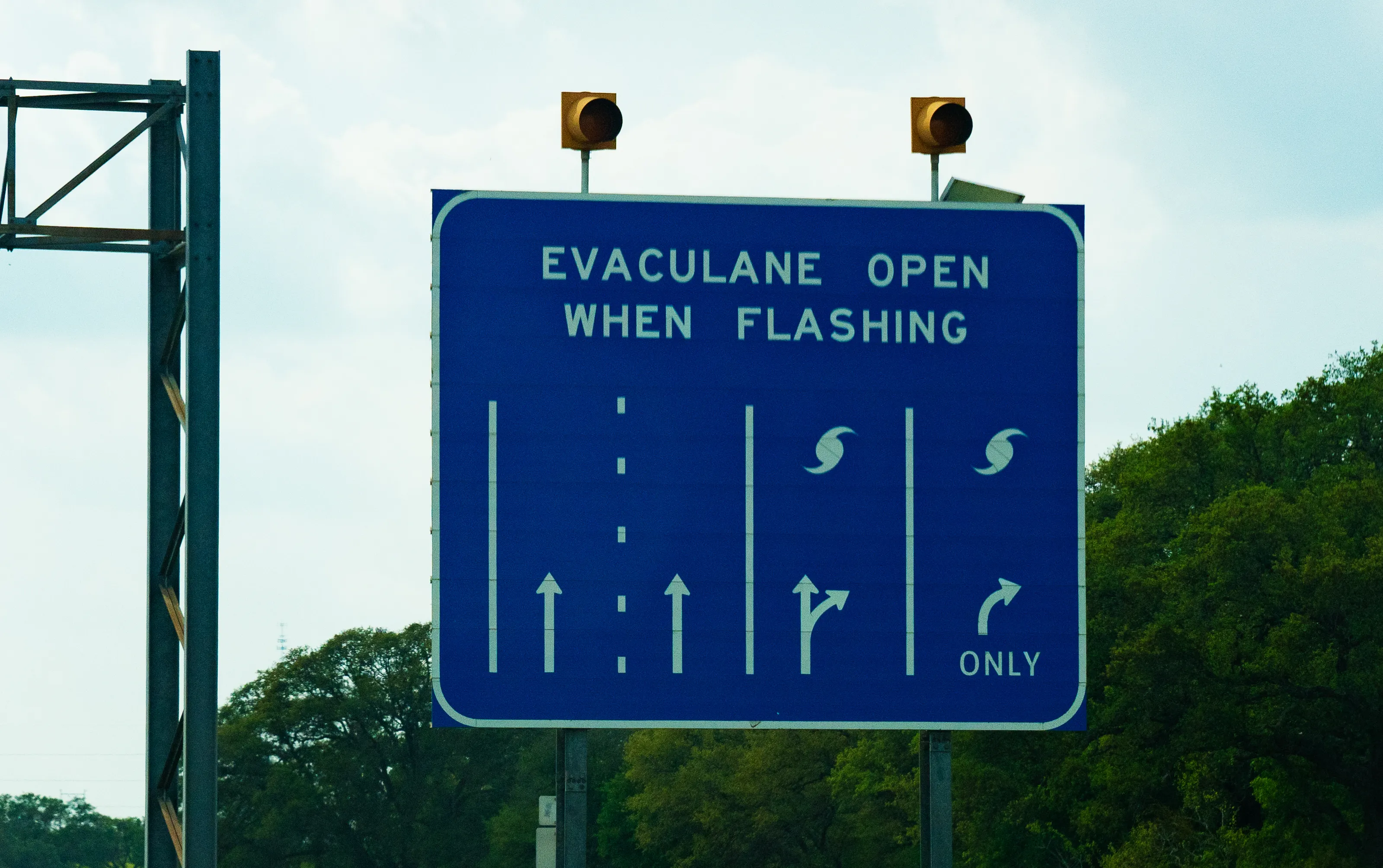
Use a destination outside the threatened area: Follow official evacuation routes and shelter guidance. There is no universal 30-foot safe elevation. If trapped by rising water, move to a higher level, avoid an enclosed attic, and call emergency services when possible.
Do Not Drive Through Flooded Areas: Six inches (150 mm) of moving water can knock down an adult. Two feet (0.6 m) of water will sweep away most vehicles. Never attempt to drive through a flooded road, even if it looks passable. Turn around and find an alternate route, or wait for the water to recede.
Prepare your property before a threat: Appropriate elevation and flood-resistant construction can reduce losses. Impact-rated windows address windborne debris, not protection from surge. Retrofitting is not a substitute for an evacuation order.
Sources
-
National Hurricane Center. (2024). Introduction to Storm Surge. NOAA. https://www.nhc.noaa.gov/surge/ ↩ ↩2 ↩3 ↩4 ↩5 ↩6
-
Irish, J. L., Resio, D. T., & Ratcliff, J. J. (2008). The influence of storm size on hurricane surge. Journal of Physical Oceanography, 38(9), 2003–2013. https://doi.org/10.1175/2008JPO3727.1 ↩
-
Weisberg, R. H., & Zheng, L. (2006). Hurricane storm surge simulations for Tampa Bay. Estuaries and Coasts, 29(6), 899–913. https://doi.org/10.1007/BF02798649 ↩
-
Rappaport, E. N. (2014). Fatalities in the United States from Atlantic tropical cyclones: New data and interpretation. Bulletin of the American Meteorological Society, 95(3), 341–346. https://doi.org/10.1175/BAMS-D-12-00074.1 ↩
-
Needham, H. F., Keim, B. D., & Sathiaraj, D. (2015). A review of tropical cyclone–generated storm surges: global data sources, observations, and impacts. Reviews of Geophysics, 53(2), 545–591. https://doi.org/10.1002/2014RG000477 ↩