Picture a huge swirl of clouds over the ocean. A hurricane is a tropical cyclone with very strong sustained winds. Warm water helps power it, but warm water alone cannot create one.
What Exactly Is a Hurricane?
A hurricane is a giant spinning storm that forms over warm ocean water. Imagine a pinwheel of clouds, rain, and wind. The small ones are about 100 miles (160 km) wide. The biggest ones stretch more than 1,000 miles (1,600 km) across. That's wider than Texas!
But not every ocean storm is a hurricane. To earn that name, a storm's winds have to reach at least 74 mph (119 km/h).1 That's fast enough to snap tree branches and peel shingles off a roof. A storm goes through two smaller stages first.
Tropical Depression
First comes the tropical depression. It's a swirl of thunderstorms with winds under 39 mph (63 km/h). Think of it as a baby storm just getting started. Some weaken; others strengthen.
Tropical Storm
If the winds pick up to between 39 and 73 mph (63 to 118 km/h), it becomes a tropical storm. This is when it gets a name, like Maria or Alex. Tropical storms bring heavy rain and gusty wind. They're not as strong as a full hurricane, but you still take them seriously.
Hurricane
Once the winds hit 74 mph (119 km/h) or higher, it's officially a hurricane.1 Now the storm is well organized, with a clear spin you can see all the way from space.
Here's something neat: this same storm has different names around the world. Near Japan and the Philippines, people call it a typhoon. Near India and Australia, they call it a cyclone. Same storm, different name, kind of like how some people say "soda" and others say "pop."
How Does a Hurricane Form?
Several conditions usually help a hurricane develop. They are useful clues rather than an exact recipe that works every time.
Ingredient 1: Warm Ocean Water
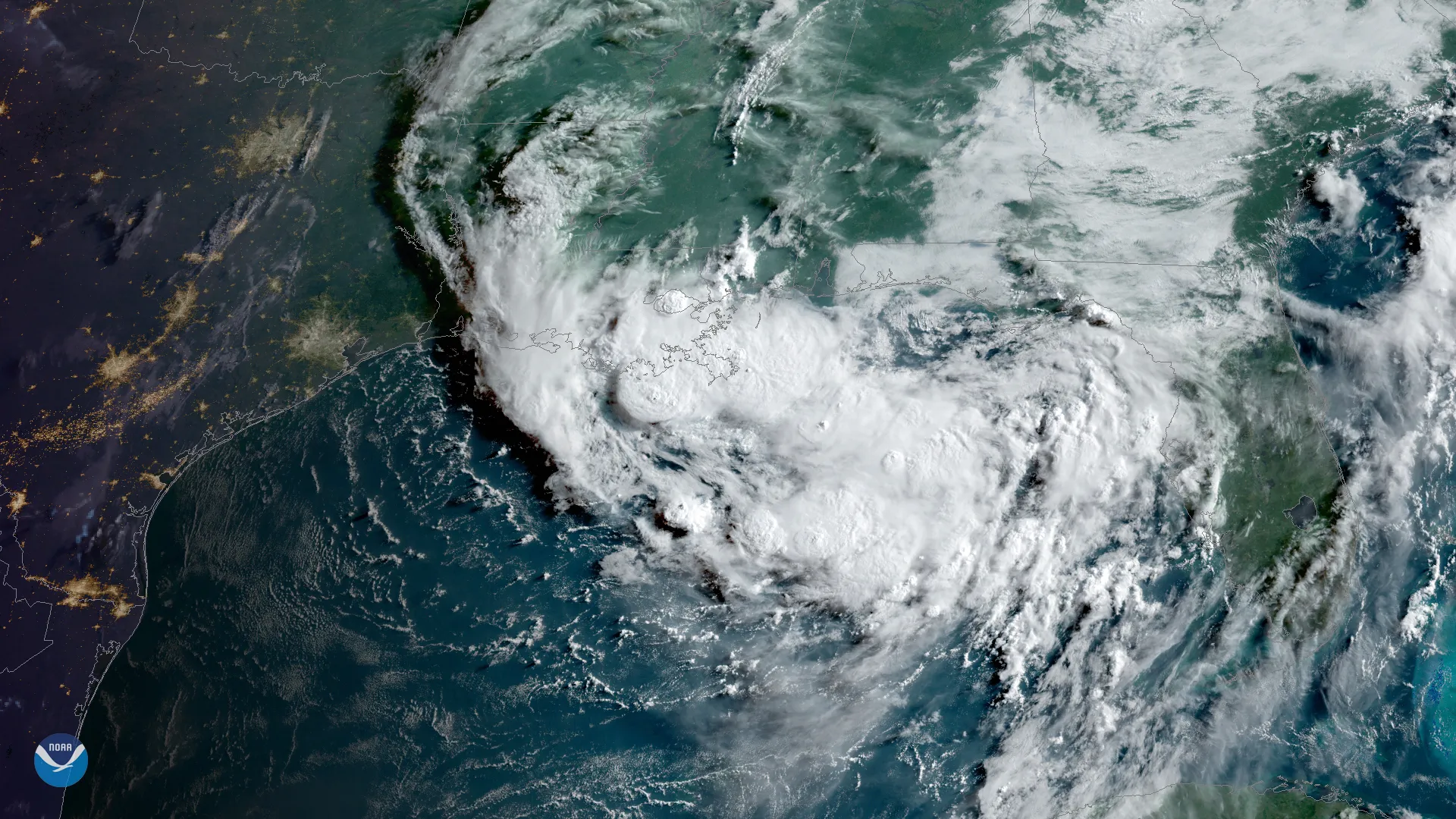
Warm ocean water supplies heat and moisture. Around 80°F (26.5°C) is a useful guide, not a strict cutoff. Deep warm water can help because a storm may mix colder water toward the surface.2
Ingredient 2: Rising, Wet Air
Warm water evaporates fast. That means the water turns into an invisible gas called water vapor, and it floats up into the sky. As that warm, wet air rises, it cools. The vapor turns back into tiny droplets and builds tall thunderstorm clouds. Making those clouds releases heat, and the heat pushes even more air up. It's a chain reaction: warm water makes vapor, vapor makes clouds, clouds make heat, and heat lifts more air.
Ingredient 3: The Coriolis Effect (Earth's Spin)
Here's the really cool part. As air rushes toward the center of the growing storm, Earth's spin makes that air curve instead of going straight. Scientists call this the Coriolis effect. North of the equator, where the United States is, it makes hurricanes spin counterclockwise. Picture water swirling down a giant drain, except it's wind swirling around a storm.
Earth’s turning has little effect on storm rotation right at the equator. Tropical cyclones usually form more than about 5 degrees away, though rare exceptions occur closer.
Ingredient 4: Calm Winds Up High
Wind shear is a change in wind speed or direction with height. Strong vertical shear can make it harder for a storm to stay organized. Weak shear helps; the upper winds do not have to be calm.
Ingredient 5: Room to Spin
Because a hurricane needs the Coriolis effect, it needs some distance from the equator to get going. So most hurricanes form between 5 and 30 degrees of latitude, north and south.2 That's why the warm, tropical parts of the Atlantic, Pacific, and Indian Oceans see the most storms.
The Parts of a Hurricane
Look at a hurricane from space and you'll see a huge, beautiful spiral of clouds. But it isn't one big blob of bad weather. It has parts, and each part has a job.
The Eye
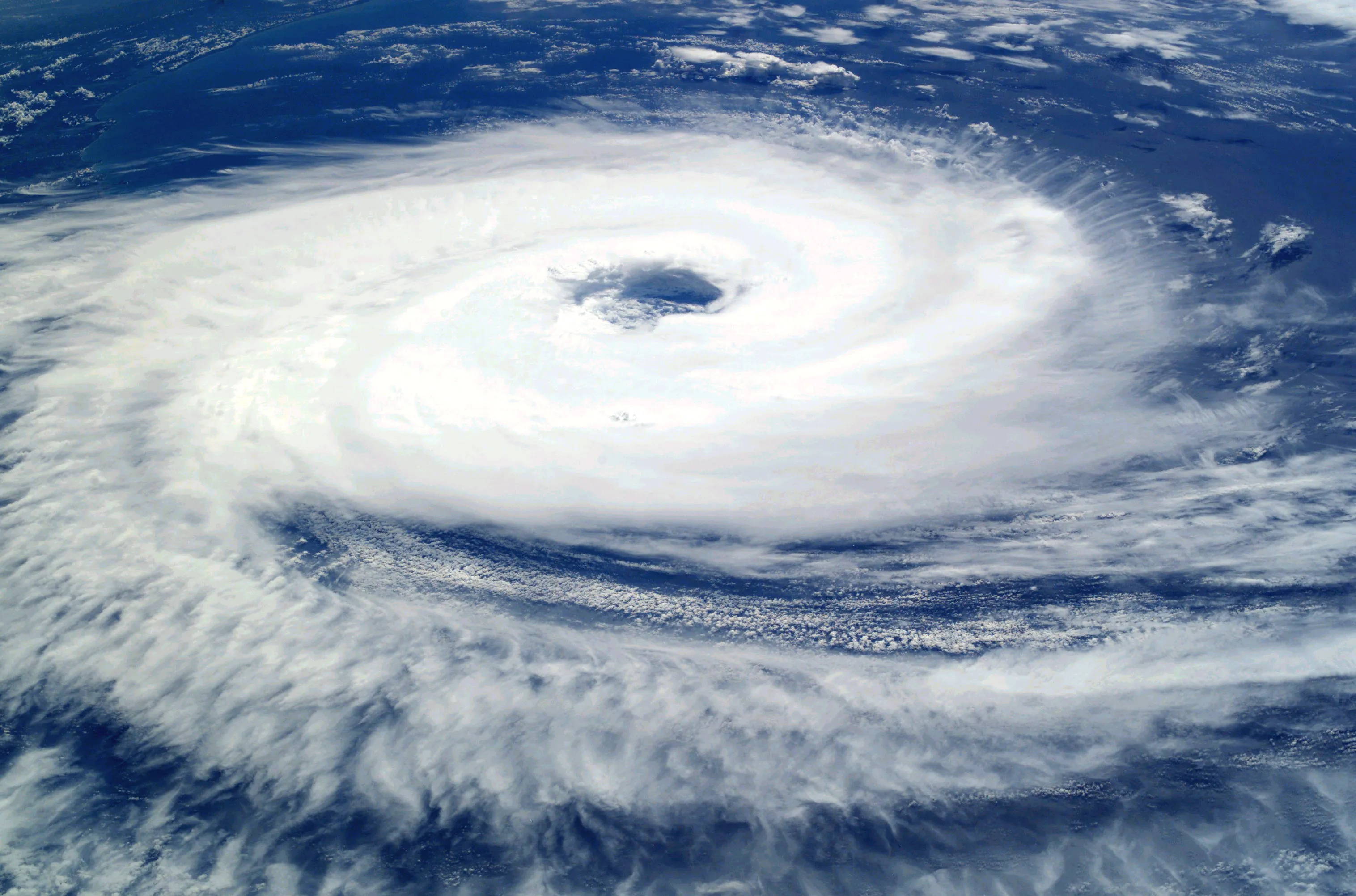
Right in the center is a calm spot called the eye. It's usually 20 to 40 miles (30 to 65 km) wide. Stand in the eye and you might see blue sky and feel only a light breeze. It can feel strangely peaceful.
A quiet spell does not mean it is safe to go outside. The other side of the eyewall may still be coming. Stay with a trusted adult and follow official instructions.
The Eyewall
The ring of clouds wrapped around the eye is the eyewall. This is where the storm is fiercest. The strongest winds, the heaviest rain, and the tallest thunderstorms are all packed in here. If the hurricane were a boxing glove, the eyewall would be the fist. Severe flooding can also occur far from the eyewall.
The Rainbands
Curling out from the eyewall like the arms of a pinwheel are the rainbands. These are long ribbons of rain and thunderstorms. They can reach hundreds of miles from the center. So even if you're far from the eye, a rainband can still bring pouring rain, gusty wind, and sometimes even a tornado. The rainbands are what make a hurricane so wide.
The Stronger Side
In the Northern Hemisphere, a moving hurricane often has stronger winds on its right side, viewed in its direction of travel. Its shape and surroundings matter too. The reported maximum wind already includes the storm’s movement, so do not add its forward speed again.
Measuring a Hurricane's Strength
Scientists rate a hurricane's strength with the Saffir-Simpson Hurricane Wind Scale. It runs from Category 1, the weakest, up to Category 5, the strongest.3 Here's how it breaks down.
Category 1: 74–95 mph (119–153 km/h)
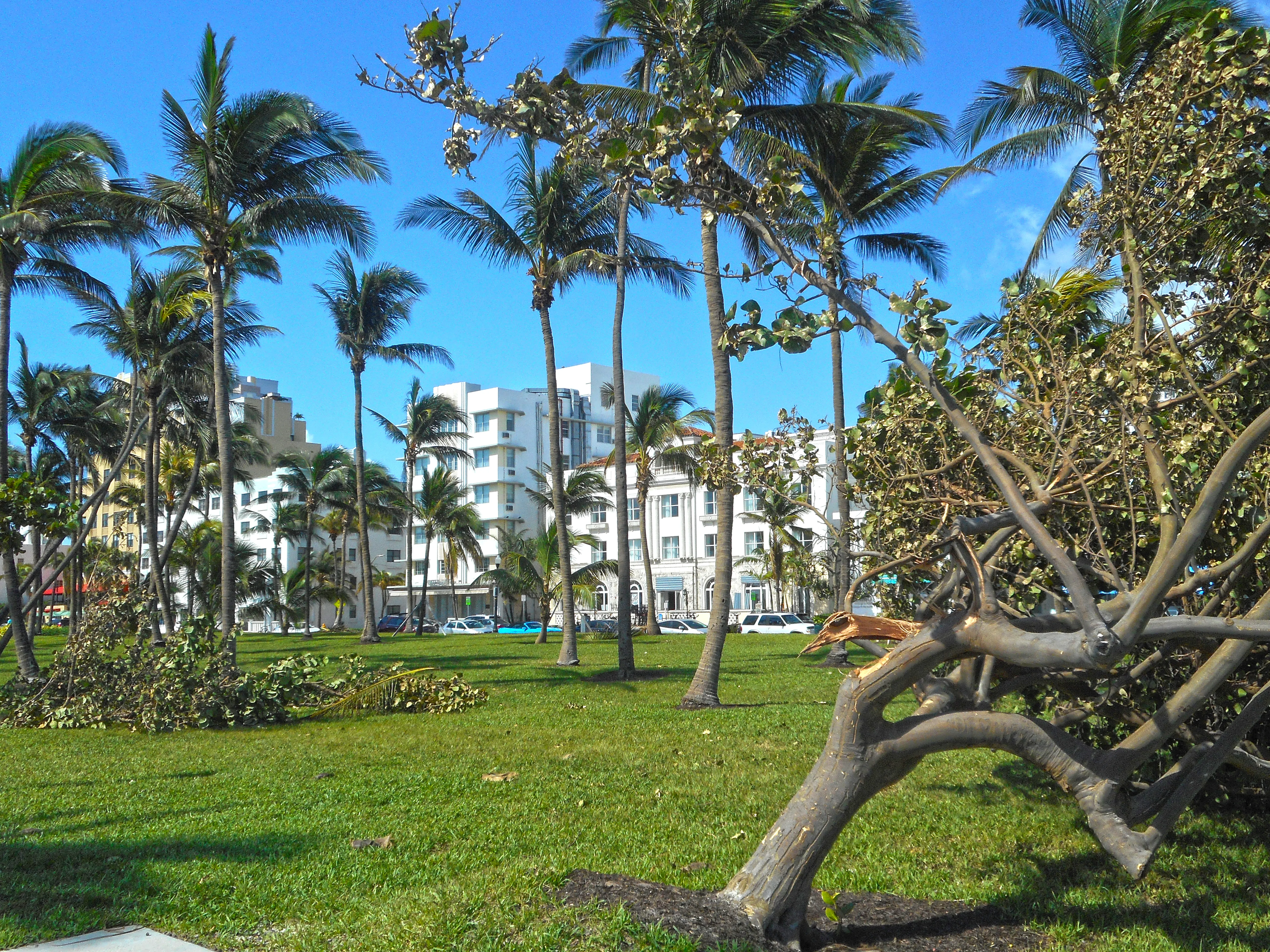
A Category 1 hurricane can damage roofs, snap big tree branches, and knock down power lines. It's the weakest kind of hurricane, but it's still a real storm that deserves respect.
Category 2: 96–110 mph (154–177 km/h)
A Category 2 does a lot more. It can rip off roofs, pull up shallow-rooted trees, and block roads with debris. The power can stay out for days.
Category 3: 111–129 mph (178–208 km/h)
At Category 3, a storm becomes a "major hurricane." It can wreck mobile homes, blow out high-rise windows, and badly damage sturdy houses. Neighborhoods can be hard to live in for a while afterward.
Category 4: 130–156 mph (209–251 km/h)
A Category 4 causes terrible damage. It can tear off roofs and walls, topple big trees, and cut a town off by wrecking its roads and power lines.
Category 5: 157+ mph (252+ km/h)
Category 5 is the top of the scale, the strongest kind of hurricane there is. The good news is they're rare. Only a handful have ever reached the United States coast at full Category 5 strength.
Remember: Categories 3, 4, and 5 are all "major hurricanes." Forecasters monitor weaker storms too, because they can cause dangerous flooding.
Forecasts can change. With a trusted adult, follow local warnings and evacuation instructions for wind and water hazards; there is no universal rule to prepare for exactly one category above the forecast.
When Is Hurricane Season?
Atlantic hurricane season officially runs from June 1 through November 30. Tropical cyclones can also form outside those dates.1
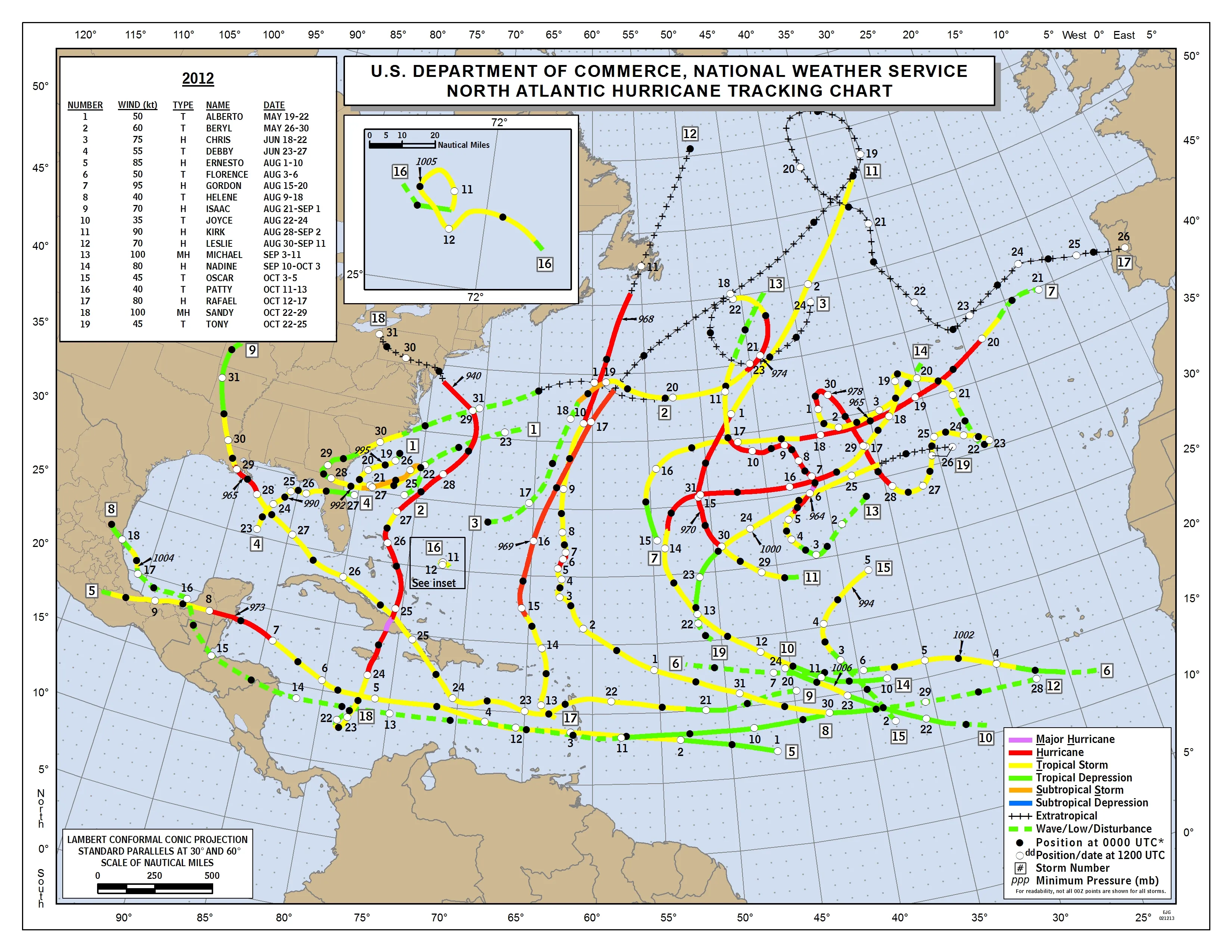
The busiest stretch is from mid-August through mid-October. That's when the ocean is warmest and the sky is friendliest for building storms. If a big hurricane is in the news, there's a good chance it's during this peak.
The eastern Pacific season starts a bit earlier, on May 15. Those storms usually stay out over open water, though they can reach Mexico and Central America.
How Many Storms in a Year?
In a normal Atlantic season, you can expect about 14 named storms. About 7 of those become hurricanes. And about 3 of the hurricanes become major hurricanes, Category 3 or higher. (Those numbers come from NOAA's 30-year average, 1991 to 2020.1) Some years are quiet. Others are wild, with 20 or more named storms.
Cool Hurricane Facts
Hurricanes aren't only scary. They're also amazing. Here are a few facts to share with your friends.
A Hurricane Is an Energy Giant
When water vapor condenses into cloud droplets, it releases a great deal of heat. That heat is different from the smaller amount of energy in the winds. Comparing it with today’s worldwide electricity production requires a dated calculation.
How Hurricanes Get Their Names
Every hurricane gets a name from a list made ahead of time, and the lists repeat every six years. If a storm is especially destructive, its name is retired and never used again, out of respect. Katrina, Sandy, Harvey, and Maria were all retired for that reason.
Where the Word "Hurricane" Comes From
English “hurricane” came through Spanish “huracán” from Caribbean Indigenous language traditions. A simple claim that it came directly from a Mayan god leaves out that history.4
The One Thing to Remember
Warm water can help sustain a hurricane, but it does not guarantee strengthening. Dry air, wind shear, internal changes and ocean cooling can weaken a storm; dangerous rain may continue after landfall.
Want to see what it's like to be inside one of these storms, safely? Head over to Hurricane Safety for Kids to learn your job before, during, and after a storm. Or find out how scientists study hurricanes with flying planes and space satellites.
Sources
-
National Hurricane Center. Tropical Cyclone Climatology. NOAA. https://www.nhc.noaa.gov/climo/ ↩ ↩2 ↩3 ↩4
-
Hurricane Research Division. Frequently Asked Questions. NOAA Atlantic Oceanographic and Meteorological Laboratory. https://www.aoml.noaa.gov/hrd-faq/ ↩ ↩2
-
National Weather Service. Saffir-Simpson Hurricane Wind Scale. NOAA. https://www.weather.gov/mfl/saffirsimpson ↩
-
NOAA, Hurricanes, cyclones and typhoons: what’s in a name?. https://www.nesdis.noaa.gov/news/hurricanes-cyclones-and-typhoons-whats-name ↩