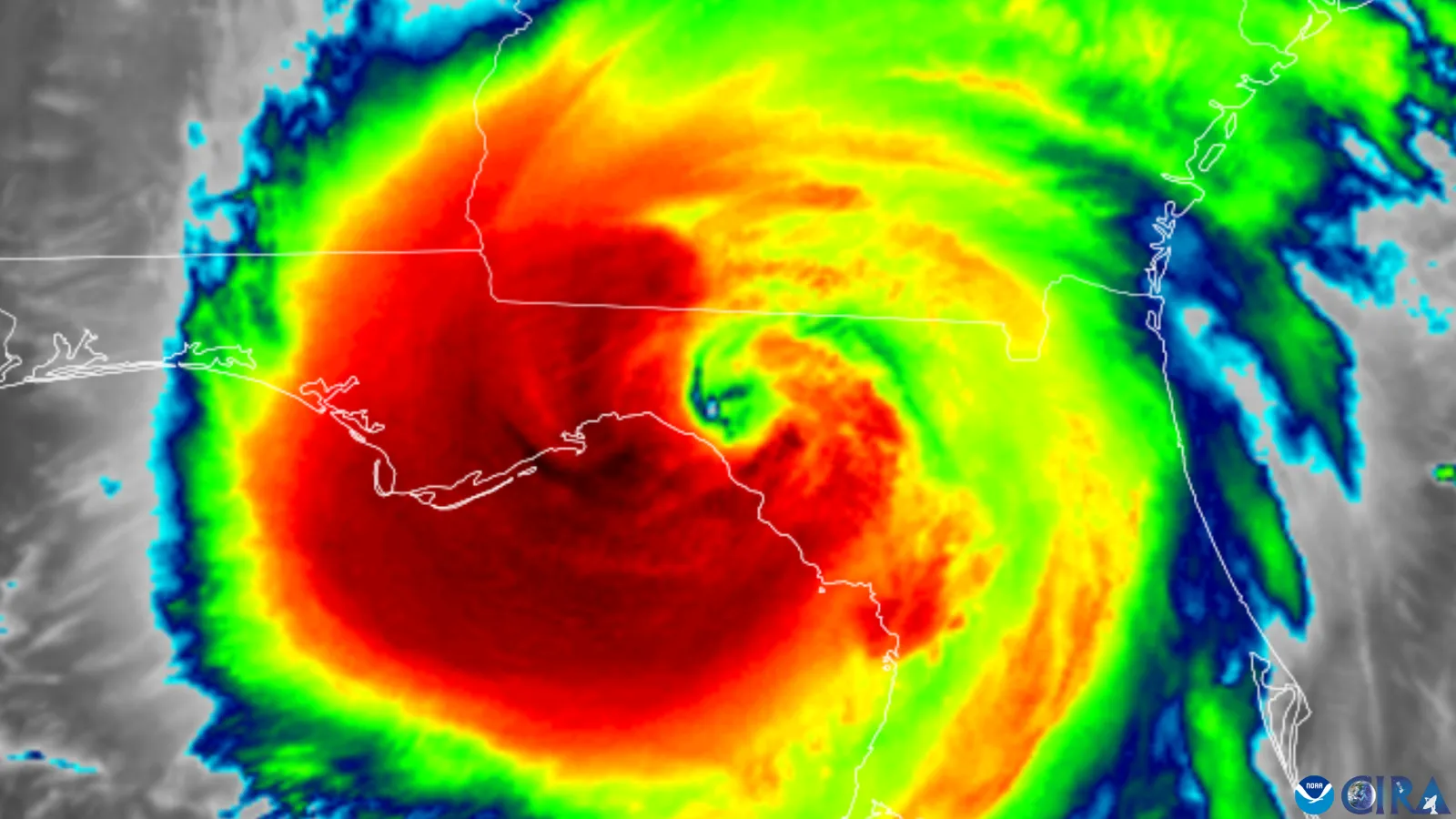
Hurricane Helene was the deadliest hurricane to strike the contiguous United States since Katrina in 2005. It came ashore in Florida's Big Bend as a major hurricane in September 2024, then carried catastrophic, historic flooding hundreds of miles inland into the southern Appalachians, a reminder that a hurricane's deadliest impacts can fall far from the coast.
Meteorological History
Helene formed in the northwestern Caribbean in late September 2024 and intensified rapidly over the exceptionally warm Gulf of Mexico. It made landfall in the sparsely populated Big Bend region of Florida on September 26, 2024, as a Category 4 hurricane with maximum sustained winds of 140 mph (225 km/h).1 Its large size drove a devastating storm surge along Florida's west coast, including the Tampa Bay area, far south of the landfall point.
Catastrophic Inland Flooding
What set Helene apart was its inland devastation. The storm's vast moisture plume, falling on terrain already saturated by days of pre-storm rain, produced historic inland flooding and landslides across the southern Appalachians: western North Carolina, eastern Tennessee, and adjacent areas.1 The Asheville region was especially hard hit, with communities cut off, roads and bridges destroyed, and water systems knocked out for weeks. Many of the deaths occurred in this inland zone, far from where a hurricane's worst effects are traditionally expected.
Human and Economic Toll
Helene was responsible for at least 250 deaths in the United States, including at least 175 direct deaths, the deadliest mainland U.S. hurricane since Katrina.1 It caused an estimated $78.7 billion in U.S. damage (2024 dollars), ranking among the costliest U.S. hurricanes on record.2
Legacy
Helene underscored the growing inland flood threat from tropical systems, especially over mountainous terrain where rainfall is enhanced and runoff is rapid. It exposed how communities far from the coast, with little hurricane experience and limited flood preparation, can suffer a storm's deadliest blows, and it intensified scrutiny of warning communication, evacuation, and resilience planning for inland regions.1
Helene shows why inland residents need rainfall, river-flood, and landslide information alongside coastal wind and surge forecasts. Prior hurricane experience differs within both coastal and inland communities; a wind category cannot express the full risk.
Sources
-
National Hurricane Center. (2025). Tropical Cyclone Report: Hurricane Helene (AL092024). NOAA. https://www.nhc.noaa.gov/data/tcr/AL092024_Helene.pdf ↩ ↩2 ↩3 ↩4
-
NOAA National Centers for Environmental Information. U.S. Billion-Dollar Weather and Climate Disasters. https://www.ncei.noaa.gov/access/billions/ ↩