Hurricane Michael was the first Category 5 hurricane to strike the Florida Panhandle and only the fourth on record to make a U.S. mainland landfall at Category 5 intensity. It obliterated the small coastal town of Mexico Beach, devastated Tyndall Air Force Base, and showed the danger of a storm that intensifies right up to the moment of landfall.
Meteorological History
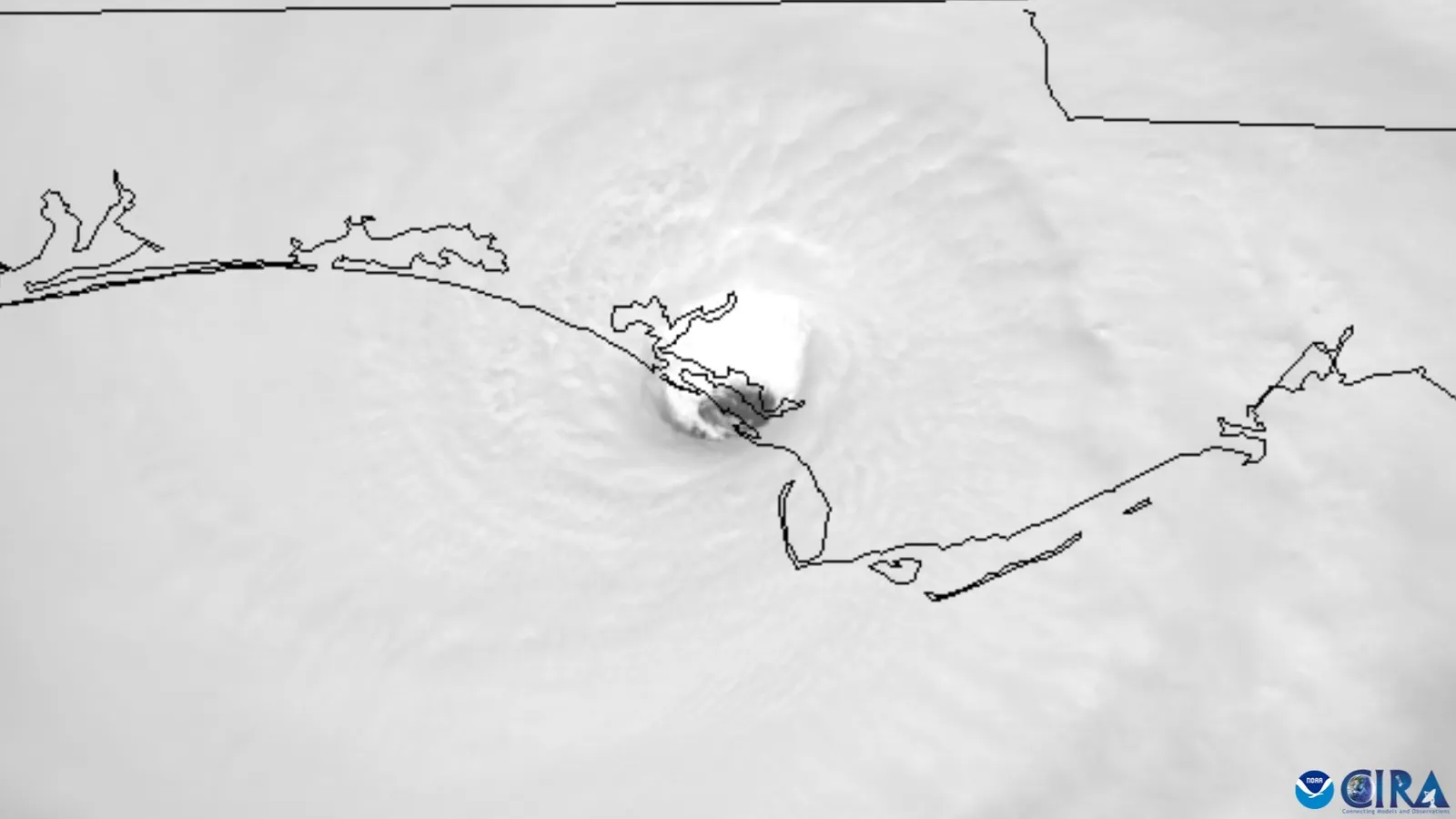
Michael formed in the northwestern Caribbean in early October 2018 and moved north into the Gulf of Mexico, where very warm water and only modest wind shear let it intensify steadily, then rapidly, as it neared the coast. Instead of weakening before landfall as many Gulf storms do, Michael strengthened up to the shoreline. A 2019 reanalysis by the National Hurricane Center upgraded Michael's landfall intensity to Category 5, with maximum sustained winds of 160 mph (257 km/h) and a minimum central pressure of 919 mb.1
Michael intensified up to landfall. The NHC post-storm analysis estimated 140 knots (160 mph) and 919 mb at landfall, and revised the operational Category 4 assessment to Category 5. The difference illustrates uncertainty in real-time intensity estimates.1
Landfall
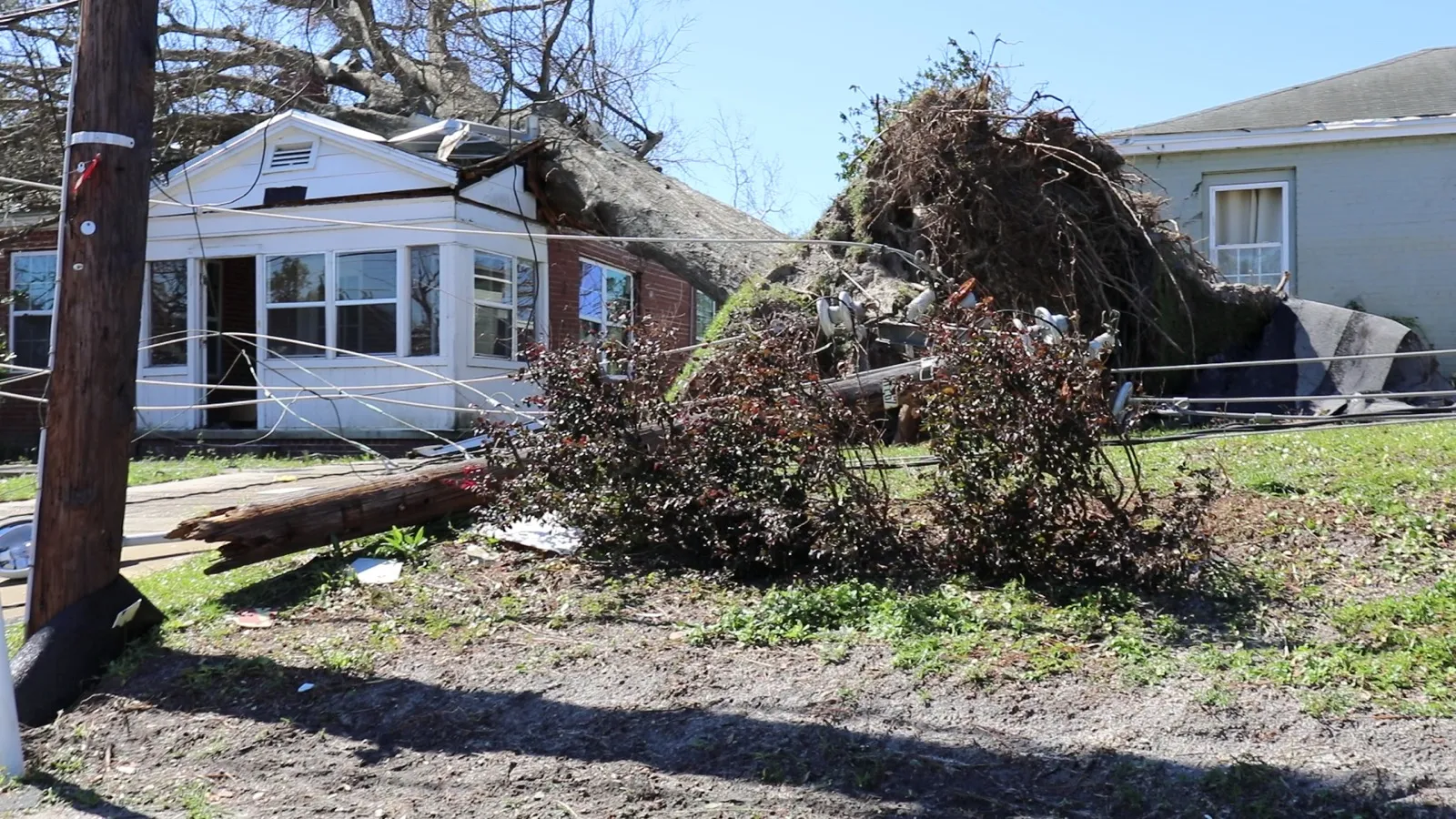
Michael made landfall near Mexico Beach and Tyndall Air Force Base, Florida, on October 10, 2018, at Category 5 intensity.1 Its extreme winds and storm-surge inundation of 9–14 feet (2.7–4.3 m) above ground in the worst-hit areas left Mexico Beach virtually erased, with many homes swept off their foundations. The few structures that survived, notably one elevated, code-exceeding house that became nationally famous, underscored the value of stringent construction standards.
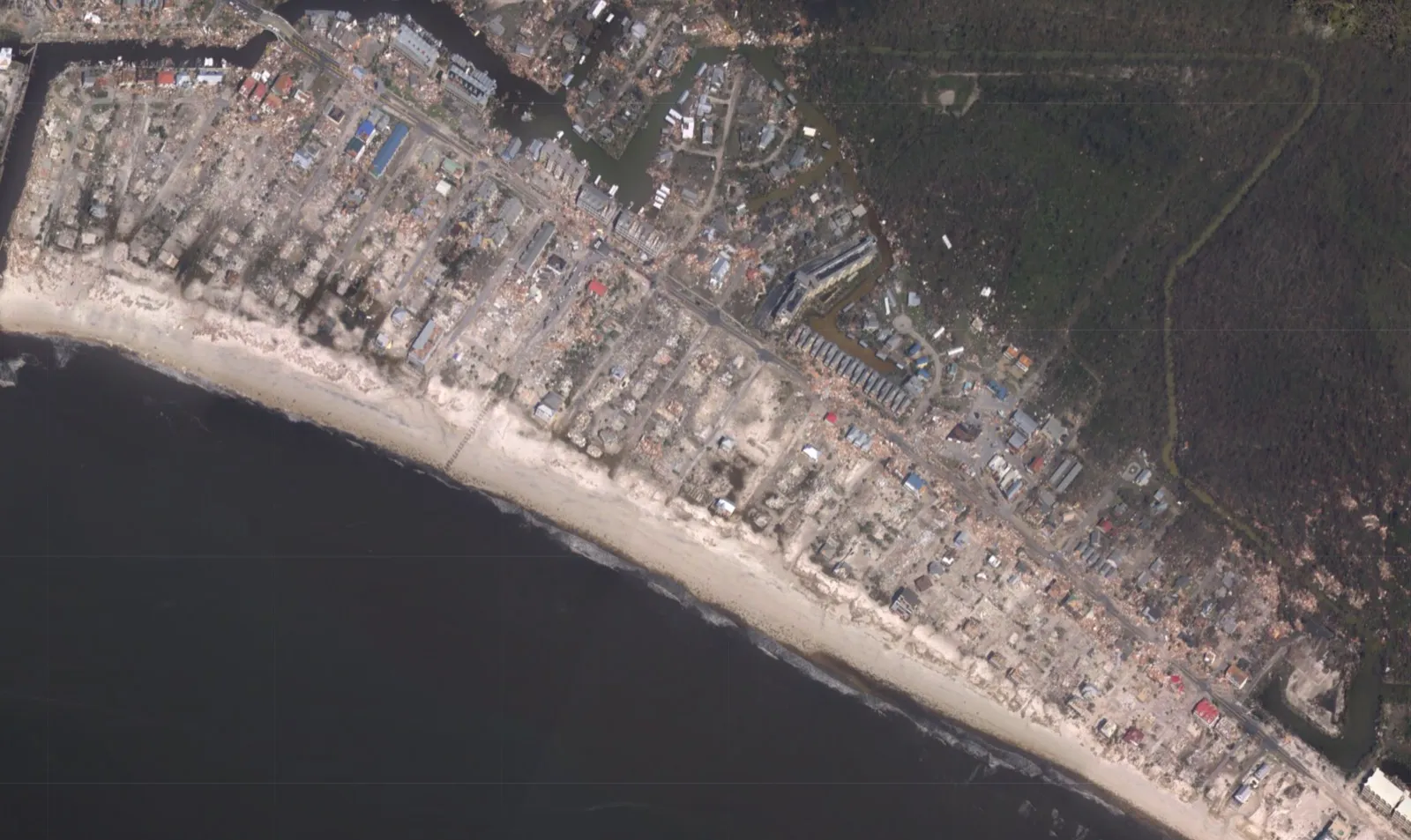
The toll on Mexico Beach was nearly total: of roughly 1,690 buildings in the town, the large majority were damaged and hundreds were destroyed outright, with water inundation reaching about 14 feet (4.3 m), an event the NHC characterized as exceptionally rare for the location.1 The handful of structures that rode out the storm stood in stark contrast to the bare slab foundations swept clean around them, a before-and-after lesson in coastal construction that engineers and code officials still cite.
Impacts
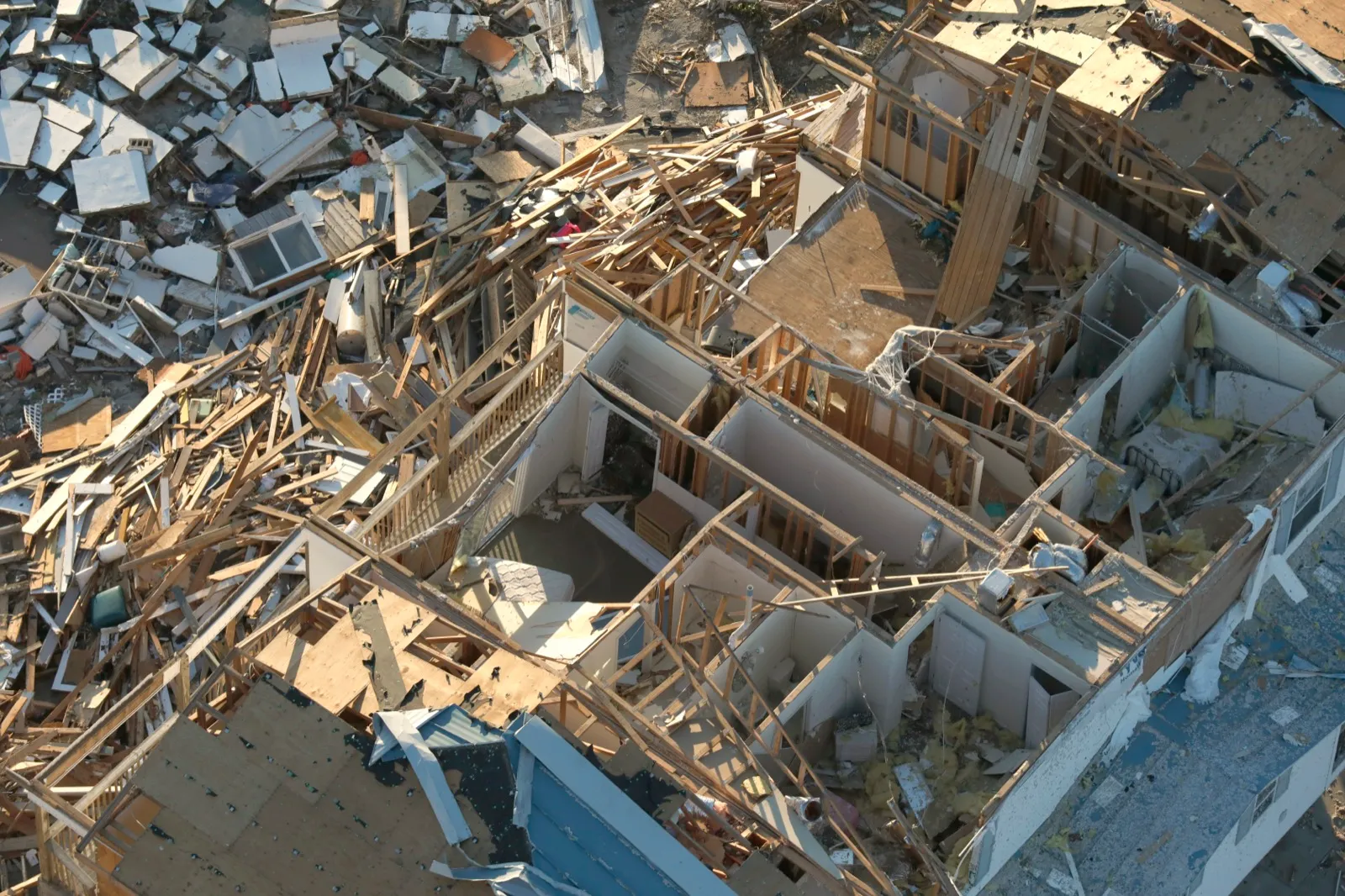
Michael caused at least 16 direct deaths in the United States; including indirect deaths, the U.S. toll rose to roughly 59, with another 15 deaths reported in Central America from flooding associated with its precursor disturbance.1 It caused approximately $25 billion in U.S. damage in 2018 dollars, with the heaviest losses, around $18 billion, in Florida.2
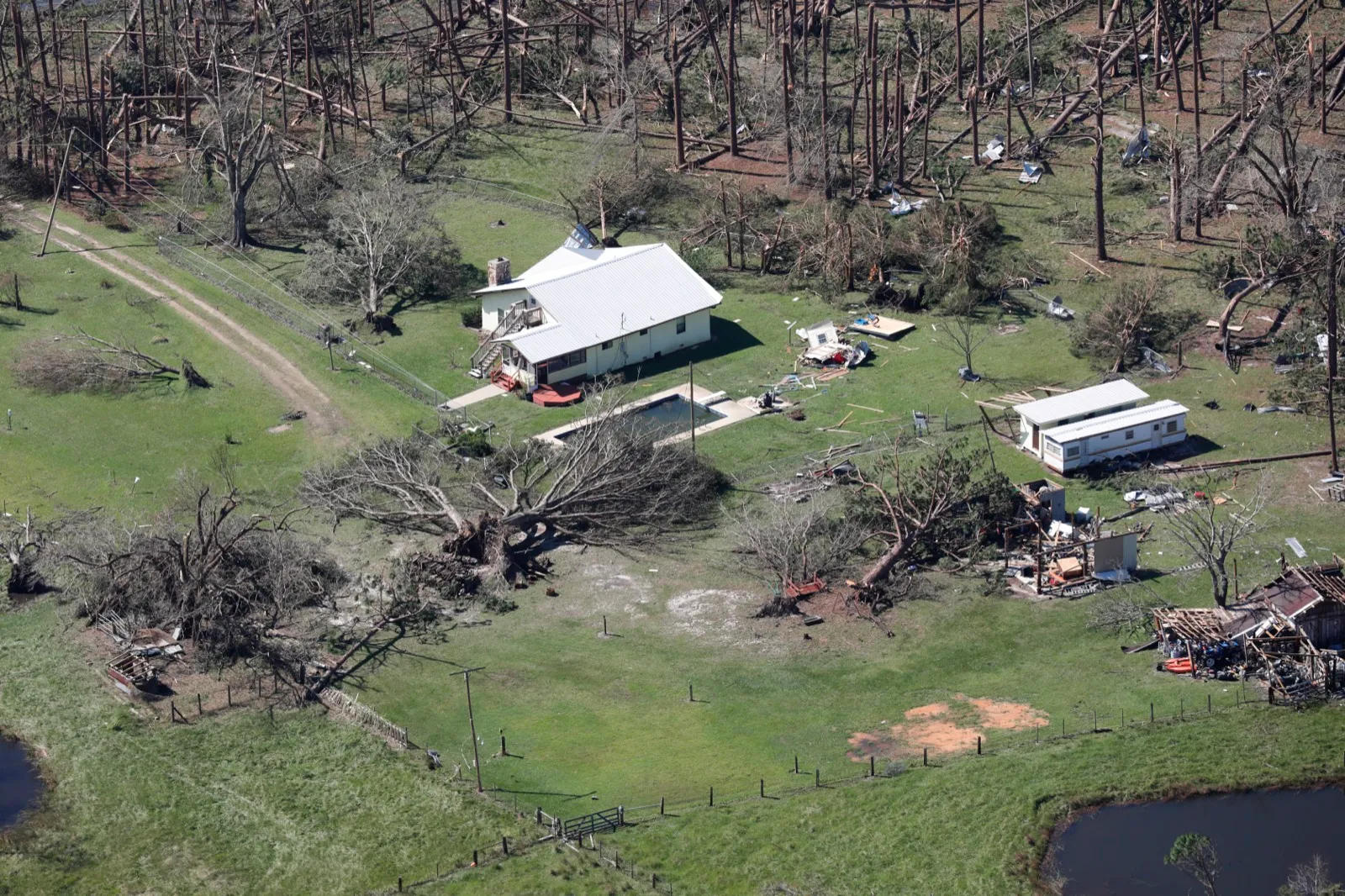
Tyndall Air Force Base, struck head-on by the eyewall, saw essentially every building damaged and hundreds destroyed, with losses running into the billions; aircraft including F-22 Raptors had to be relocated or repaired.1 Still a hurricane as it crossed into Georgia, Michael ranked among the strongest storms on record to reach the interior Southeast, flattening pecan orchards, cotton, and timber and inflicting severe agricultural losses far from the coast.
Legacy
Michael reinforced two hard lessons. First, rapid intensification near the coast can rob communities of preparation time, turning a "major hurricane" forecast into a worst-case outcome within a day. Second, building standards matter decisively: the contrast between obliterated older buildings and surviving modern, elevated ones in Mexico Beach is among the clearest real-world demonstrations of why wind- and surge-resistant codes save lives and property.3 Michael's Category 5 upgrade also illustrated how post-storm reanalysis continues to refine the historical record.1
Some elevated and strengthened buildings performed better than nearby vulnerable structures, but one surviving house does not isolate the effect of design from exposure and other factors. FEMA’s mitigation assessment is the appropriate basis for construction lessons; no design makes a house immune to every hurricane hazard.
Sources
-
Beven, J. L., Berg, R., & Hagen, A. (2019). Tropical Cyclone Report: Hurricane Michael (AL142018). National Hurricane Center. https://www.nhc.noaa.gov/data/tcr/AL142018_Michael.pdf ↩ ↩2 ↩3 ↩4 ↩5 ↩6 ↩7
-
NOAA National Centers for Environmental Information. U.S. Billion-Dollar Weather and Climate Disasters. https://www.ncei.noaa.gov/access/billions/ ↩
-
Federal Emergency Management Agency. Mitigation Assessment Team Report: Hurricane Michael. Building Science. https://www.fema.gov/emergency-managers/risk-management/building-science ↩